



How to Choose Marble Slab
Choosing marble is not really about choosing “a white stone you like.” That is how people end up paying for a premium slab and still feel disappointed after installation.
A marble slab can look stunning in the yard and still be the wrong choice for your home. The problem is usually not the marble itself. It is the buying process. Most buyers compare only colour, ignore slab size and thickness, don’t inspect the surface properly, and judge price too early. Then the real issues show up later: awkward joints, too much wastage, visible repairs, etching in the kitchen, or a floor that looked brighter in the showroom than it does at home.
If you’re seriously trying to understand how to choose right marble slab, or even how to choose marble for a home in India, start with one rule: do not buy marble like paint. A slab is not just a colour. It is a full combination of pattern, structure, thickness, finish, usable size, maintenance behaviour, and suitability for a specific room.
This guide is written for serious buyers: homeowners, architects, interior designers, and anyone trying to make the right marble decision for flooring, walls, stairs, bathrooms, kitchens, and living spaces.
Start with the use, not the look
Before you look at Italian marble shades, bookmatch patterns, or any marble catalogue, decide where the slab will actually be used.
That sounds obvious, but most mistakes start here. A marble that works beautifully on a feature wall may be a bad choice for a busy kitchen. A slab that looks elegant in a powder bathroom may be too delicate or too visually busy for full-house flooring. And a dramatic slab design that works in one statement area can become tiring if you spread it across 2,000 square feet.
1. Flooring
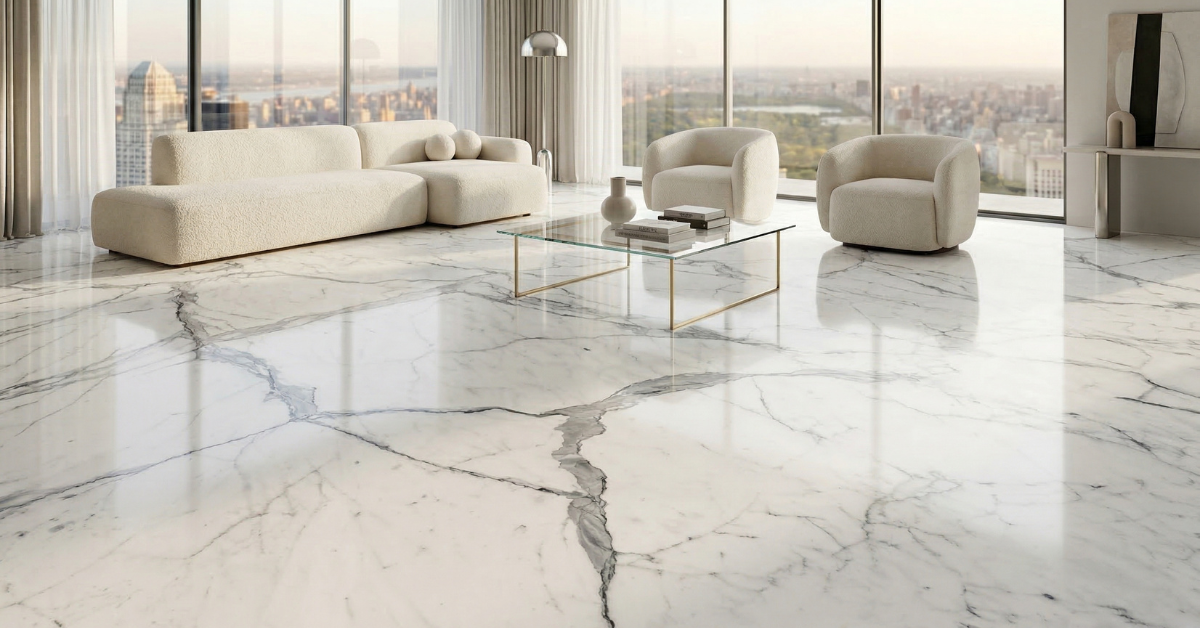
For flooring, you need consistent visual flow, enough slab availability for the total area, workable thickness, and a finish that suits traffic and maintenance. Very busy veining can make large floors look noisy. Extremely soft or fragile material can create more risk during cutting and laying.
2. Walls and feature panels

Walls are more forgiving structurally, so you can focus more on movement, drama, and bookmatch potential. This is where striking slabs often make the most sense.
3. Stairs

Stairs need more thought than people give them. You need edge durability, slip awareness, and pattern continuity. A glossy polished slab may look rich, but on stairs that finish can become impractical.
4. Kitchen
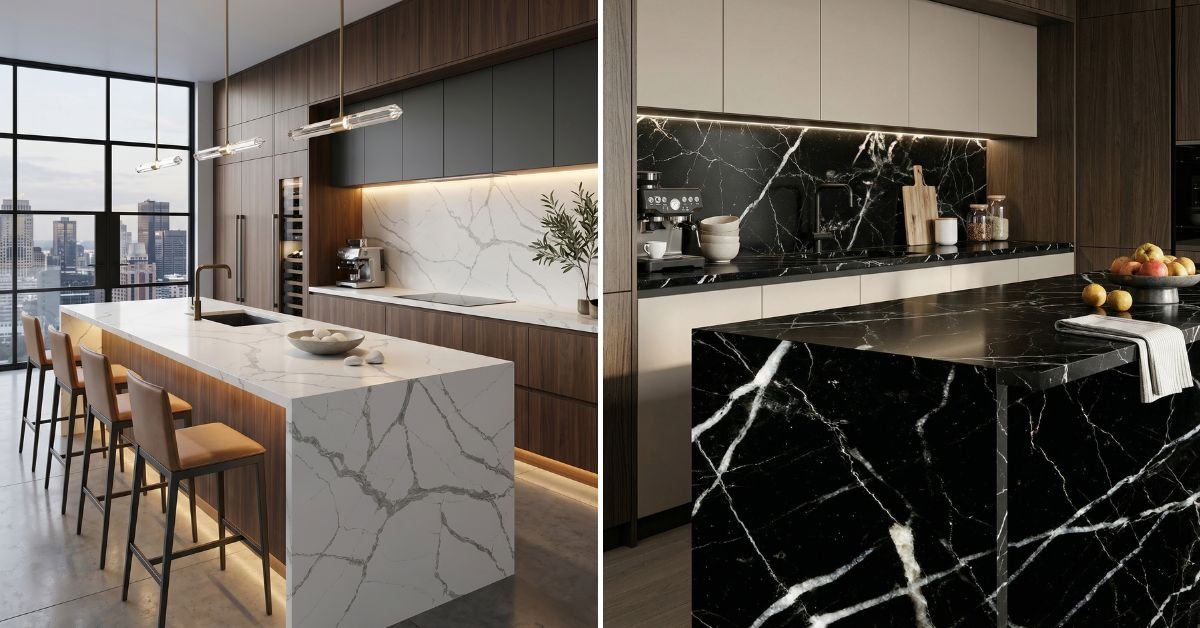
The kitchen is where buyers become unrealistic. They want the beauty of marble but expect the behaviour of granite. That is not how stone works. Marble is a calcium-based natural stone. It can etch with acidic spills, and some finishes show that wear faster than others. Granite is generally harder and more forgiving in heavy-use kitchens, while honed marble tends to hide etching better than polished marble, though it also needs more careful sealing because it is more porous.
5. Bathrooms and vanities
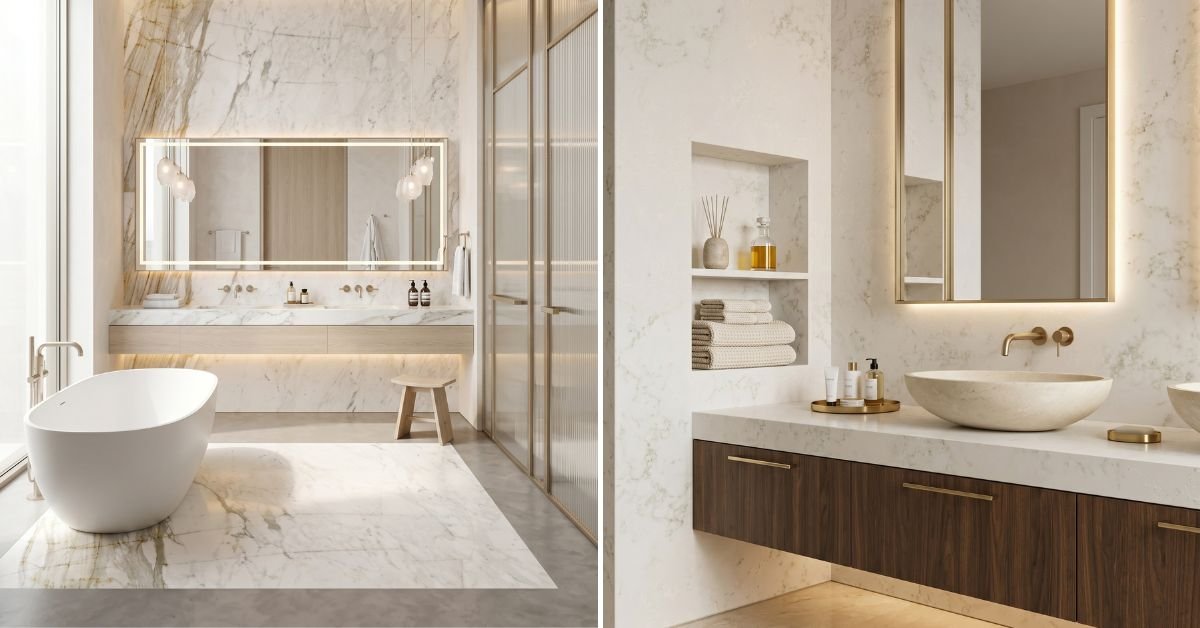
Bathrooms are usually easier than kitchens, but water spots, soap residue, and finish choice still matter. A finish that looks luxurious in photos may be annoying in daily use if it constantly shows marks.
So before anything else, ask one blunt question: Where exactly is this slab going, and what will that area demand from it every day?
How to choose marble slab: the 8 things that matter most
If you are standing in a showroom or yard, these are the factors that actually decide whether a slab is a good buy.
1) Check slab quality before you fall for the pattern
A lot of buyers do this backwards. They first get emotionally attached to the look. Then they start checking the slab. Wrong order.
You should inspect quality first, because natural marble can have acceptable natural features and unacceptable damage. One of the most important things to understand is the difference between a fissure and a crack. Fissures are naturally occurring and usually do not change the plane of the surface. Cracks are structural breaks, often caused by handling or stress, and they are a much bigger concern. A common field check is simple: if your nail catches, the line is uneven, or it cuts across the structure awkwardly, treat it seriously. Good inspection guides also recommend viewing the slab in raking light because low-angle light reveals repaired areas, waviness, and surface issues that overhead lighting can hide.
Also inspect for these issues:
Surface polish :
The polish should look even, not patchy. Dull zones, cloudy areas, or uneven reflection can point to poor finishing or inconsistent stone density. Reputable buying guides recommend checking slabs under natural light and from side angles because polish defects are easier to spot that way.
Edge condition :
Look at the edges and corners. If the edges already show weakness, chipping, or patchy repairs before fabrication, that is a warning.
Fillings and repairs :
Many stones are resin-filled, and that is not automatically a deal-breaker. But you should know about it. Ask directly whether the slab has filling, reinforcement, back mesh, or repaired cracks.
Consistency across slabs :
If you are buying for a large area, one slab is irrelevant. You need to see the lot. A beautiful single slab does not help if the next ten are darker, duller, greener, or more broken in pattern.
Authenticity and origin :
If you are paying for true imported stone, verify what it actually is. High-demand names like Calacatta and Statuario are often used loosely in the market. Even design guides recommend asking about origin instead of trusting the label blindly.
2) Marble thickness is not a small detail
A surprising number of buyers ignore thickness until the quote stage. That is lazy buying.
Thickness affects durability, handling, edge appearance, weight, and price. Supplier and fabrication guides commonly place marble slabs in these broad thickness buckets:
- 16–18 mm: often used for standard residential applications, moderate-use flooring, cladding, and lighter installations
- 20 mm: a practical thicker option for many countertops, vanities, and higher-use areas
- 30 mm: heavier-duty use, larger spans, and projects where a thicker edge or stronger feel is preferred
That does not mean “thicker is always better.” It means the thickness should match the job.
For flooring :
In many Indian homes, standard slab thickness in the 16–18 mm range is common and workable for residential flooring, but you still need proper laying, substrate preparation, and polishing. For high-traffic areas or where you want extra confidence, 20 mm can make sense.
For kitchen counters and vanities :
20 mm is a common practical choice. Thicker material or thicker-looking fabricated edges may be better when there are cut-outs, unsupported spans, or a more premium edge profile.
For walls and cladding
Lighter thicknesses are often used because vertical application has different structural needs and weight matters more.
A serious buyer should ask not just “what is the marble thickness in inches?” but also: where is this thickness suitable, and what installation method is planned?
3) Slab size matters more than most homeowners think
When people search for marble slab size in mm, marble slab size in cm, or marble slab size in feet, they usually want a simple standard number. Real stone does not work that neatly.
Natural marble slab sizes vary by quarry, block size, and processing. Current slab-size guides commonly place many marble slabs roughly in the range of 2400–3000 mm length and 1200–1800 mm height, while more countertop-style references often use ranges around 108–120 inches by 60–72 inches. But the number that matters even more is usable size, which can be smaller than the gross slab because natural edges are irregular and fabrication needs allowance. Some guides estimate the usable area may be 5–10 cm smaller than the gross slab dimensions.
Why does this matter?
Because slab size affects:
- how many joints you will have
- whether long stair treads can be cut in one piece
- whether a bookmatch wall can be done properly
- how much wastage you will pay for
- whether vein flow will look continuous
A cheaper slab with poor yield can end up costing more than a higher-rate slab that cuts efficiently.
If you are buying for flooring, do not ask only for marble slab size in feet. Ask the supplier to explain:
- gross slab size
- usable finished size
- how many slabs are available in that lot
- expected wastage for your layout
- whether the key cuts can be taken without ugly seams
That is real buying logic. Everything else is brochure talk.
4) Choose colour, background, and veining for the whole space, not one photo
Many buyers make the mistake of selecting marble from a single close-up image or a polished social-media shot. That is exactly how poor decisions happen.
A marble slab should be judged at full scale. Pattern movement, base tone, vein density, and balance matter much more on a full slab than in a cropped photo. Even slab-reading guides advise buyers to decide beforehand how much movement they want and whether pattern continuity or bookmatching matters for the project.
Here is the practical way to think about it:
If you want calm, timeless flooring
Choose a quieter slab. Too much contrast and movement across large floor areas can make the whole house feel restless.
If you want a statement wall or foyer feature
This is where bold movement, stronger contrast, and bookmatch potential make sense.
If you want a classic white marble look
Do not buy the first bright white slab you see. Compare background tone carefully. Some whites are warmer, some cooler, some more crystalline, and some look artificially over-bright because of processing or treatment. Quality guides specifically warn buyers to be cautious of slabs that look unnaturally white or overly polished because surface treatment can mask defects.
If you are mixing multiple spaces
Your marble selection should fit the design language of the house. Flooring, bathroom, wall panels, and stairs do not all need to be the same stone, but they should not fight each other either.
5) Finish selection changes daily performance
People often talk about finish as if it is only a style decision. It is not. It changes how the marble behaves, how much it reflects light, how quickly you notice wear, and how much maintenance you will tolerate.
The main marble finishes you will usually deal with are:
Polished finish
Polished marble gives you the deep, glossy, luxurious look that most people associate with premium stone. It sharpens colour and veining. But it also shows etching, dull spots, and surface wear more clearly, especially in kitchens.
Honed finish
Honed marble has a matte or satin look. It tends to hide etching better because an acid mark on a matte surface is less obvious than on a glossy one. But honed marble is also usually more porous and can require more careful sealing and stain management. For kitchens and some bathrooms, many professionals prefer honed when the buyer loves marble but wants a more forgiving day-to-day appearance.
Leathered or textured finishes
These are less common in classic marble-heavy Indian interiors than polished, but they can work for certain darker stones or more tactile design styles. The point is not to chase trend names. The point is to match finish to use.
So if you are wondering how to choose marble slab for kitchen use, finish is not a side detail. It is one of the main decisions.
6) Room-wise advice: flooring, walls, stairs, kitchen, bathroom
This is where theory has to become practical.
Marble for flooring
For flooring, focus on consistency, repeatability, and liveability. You want enough slabs from the same lot, manageable movement, suitable thickness, and a finish that matches your lifestyle. Very delicate or heavily repaired slabs are a bad gamble on floors. If the house gets strong dust, traffic, or frequent mopping, you should be extra careful with high-gloss surfaces that show every mark.
Marble for walls and feature areas
Here you can be more design-forward. Bookmatch, dramatic movement, and stronger veining make more sense on walls because the surface is being viewed, not walked on. Slab size matters a lot here because broken patterns and too many seams kill the effect.
Marble for stairs
Stairs should not be treated like mini floors. Edge finishing, slip comfort, and durability matter more. A stair in a family home should not look like an Instagram set that becomes irritating after two weeks.
Marble for kitchen
This is where honesty matters. Marble can absolutely be used in kitchens, and many buyers still prefer it for its visual richness. But if you cook heavily, use acidic ingredients constantly, and want a low-maintenance surface, granite is usually the more practical option. Granite is harder and more scratch-resistant than marble, while marble is softer and more prone to etching and staining. A lot of comparison guides come to the same basic conclusion: marble wins on certain aesthetics; granite wins on kitchen tolerance.
If you still want marble in the kitchen:
- choose a finish with realistic expectations
- inspect porosity and sealing requirements
- avoid buying only on whiteness
- ask how the slab behaves around lemon, vinegar, tomato, oil, and masala-heavy cooking
Marble for bathrooms and vanities
Bathrooms are easier than kitchens, but finish still matters. Honed surfaces often hide water spots and daily wear better, while polished surfaces give more shine and visual drama. Both can work if you understand the maintenance trade-off.
7) Price alone should never decide the purchase
A lot of people search “marble slab price,” “price of marble slab in India,” or “how much does 1 sq ft of marble cost?” expecting a clean answer. Realistically, there is no single number that means anything on its own.
The Indian marble market spans a huge range. Current supplier-style price guides show some domestic or simpler marble categories starting around ₹80 per sq ft or similar entry points, while imported Italian marble can move from a few hundred rupees per sq ft into the premium and ultra-premium range, with some guides placing higher-end imported selections well above ₹2,500–₹5,000 per sq ft depending on variety, grade, rarity, thickness, and finish.
So the right question is not “Which slab is cheapest per sq ft?”
The right questions are:
- Is the rate for the actual slab I inspected or just a bait number?
- What thickness is quoted?
- How much wastage will my layout create?
- Does the lot have consistency?
- Is the stone heavily filled or repaired?
- What is the laying, cutting, polishing, transport, and sealing cost?
- Will I need more maintenance over time?
A lower marble slab price can hide higher project cost. A slab with poor usable yield, inconsistent supply, extra filling, or more breakage risk can turn a “cheap” purchase into a stupid one.
8) How to inspect a slab in a showroom
If you do only one thing right, do this properly.
Do not inspect marble casually while standing three feet away under random lighting. That is not inspection. That is browsing.
Here is the practical showroom method:
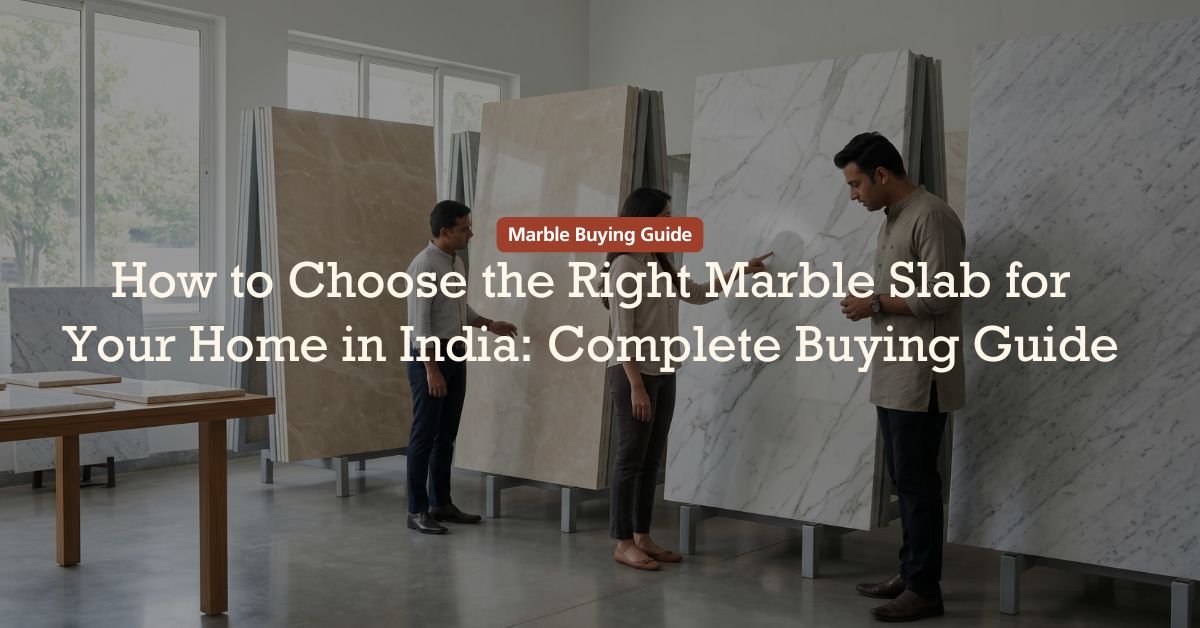
View the full slab upright
You need to see the whole picture. Vein movement, balance, and large patches cannot be judged from a sample.
Step back
Stand far enough away to see how the slab reads as a full surface, not just as a pattern.
Come close and inspect the details
Check cracks, fissures, fill lines, polish quality, edge condition, corner damage, and any mesh or repair marks.
Use side light or flashlight if needed
Low-angle light reveals more than overhead lights. It can show waviness, filled spots, and surface irregularities that disappear under bright showroom lighting.
Check more than one slab
If you are buying for a floor or a large area, one slab means nothing. Compare the lot.
Ask for dimensions clearly
Get slab size in mm, cm, or feet, but also ask what usable cut size is realistic for your project.
Ask direct questions
Do not behave like you are afraid to ask. Ask:
- Is this natural or treated?
- Is it filled?
- Is it back-meshed?
- What thickness is this exact slab?
- Is more stock available from the same lot?
- Where is it from?
- Has it been repaired?
See it in normal light if possible
A slab that looks dramatic under showroom lighting can look flat or overly cold at home.
Common mistakes people make while choosing marble slabs
These mistakes are extremely common, and most of them are self-inflicted.
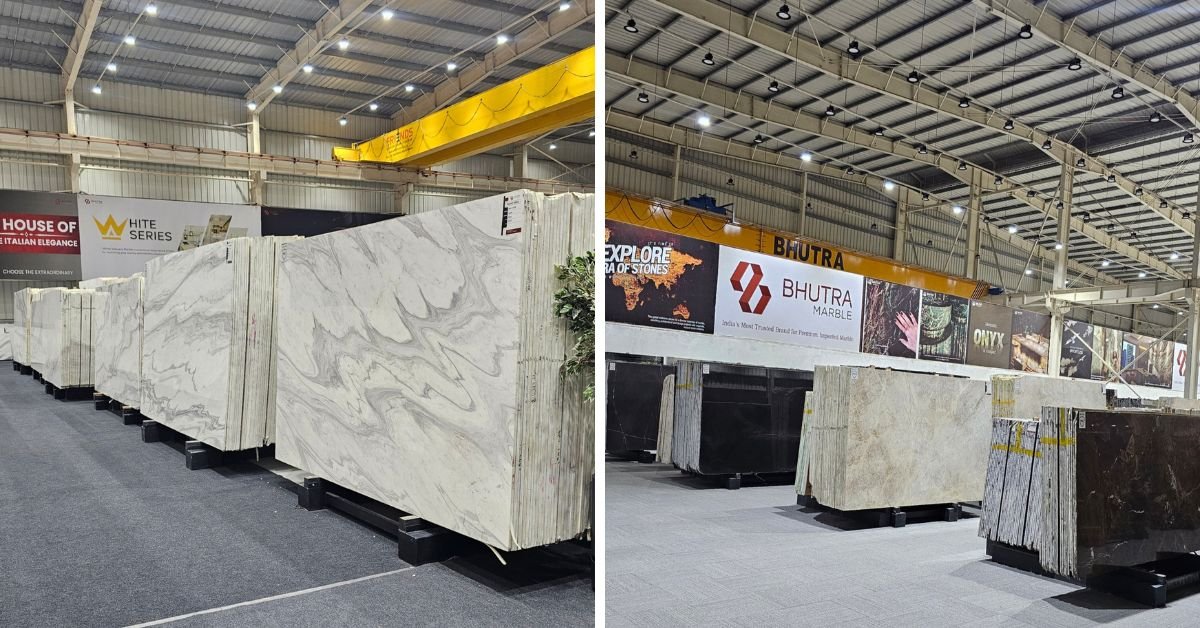
Buying from photos only
Photos lie. They compress pattern, hide repairs, and distort tone.
Judging on whiteness alone
“Whiter” does not automatically mean better. Sometimes it means over-processing or simply the wrong stone for your house.
Ignoring lot consistency
For a large floor, continuity matters more than one hero slab.
Treating kitchen marble like granite
If you want zero maintenance behaviour, marble may not be your smartest choice for that application.
Not checking thickness
This directly affects strength, installation, and cost.
Ignoring slab size and wastage
A good-looking slab with poor cut yield can wreck your budget.
Comparing only per-sq-ft rates
That is amateur buying. Compare the full project cost and the actual slab quality.
Not thinking about finish
Polished and honed do not behave the same. Choose based on daily use, not just showroom glamour.
Should you choose Indian marble, Italian marble, or granite?
This depends on where the material is going and what you care about more: look, durability, or budget.
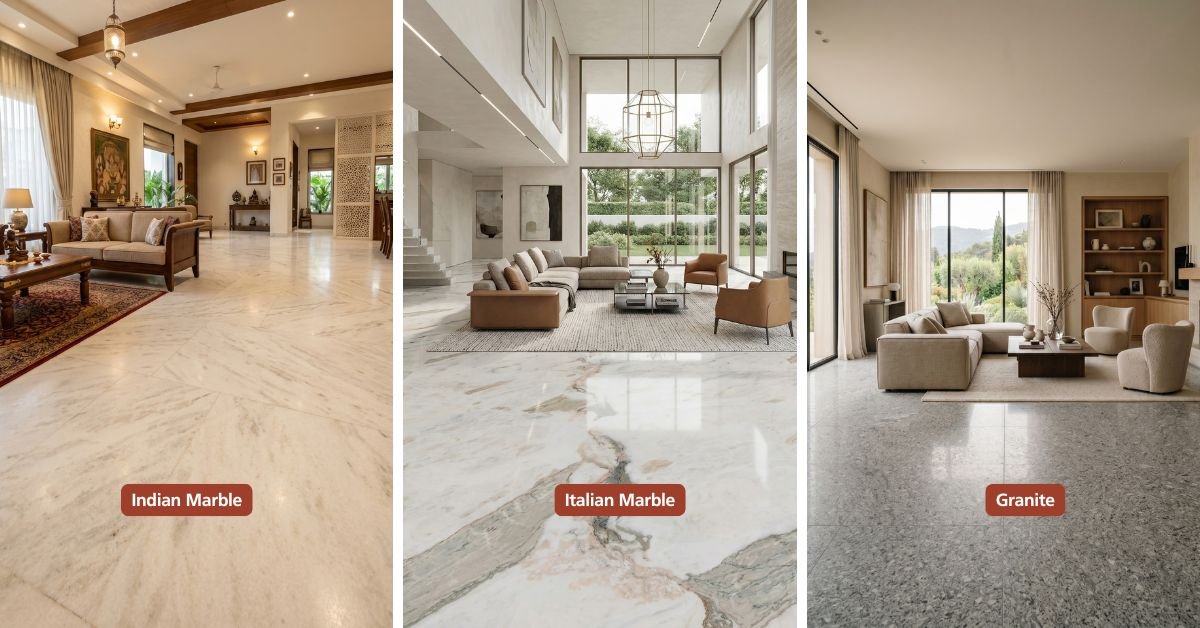
Italian marble
Italian marble is generally chosen for its refined base, higher visual drama, and luxury feel. Current Indian comparison guides continue to frame it as the premium aesthetic choice, especially for statement interiors. But it is also commonly presented as softer, more porous, and more maintenance-sensitive than harder alternatives.
Indian marble
Indian marble is usually the more practical and cost-effective option for bigger areas and more demanding use. Comparison guides commonly position it as better suited to high-traffic zones and large flooring projects because it is easier on budget and often more forgiving in use.
Granite
Granite is not marble, and pretending otherwise is pointless. If your priority is kitchen toughness, lower maintenance, and better resistance to scratches and stains, granite has a stronger practical case. Marble still wins where the buyer wants a softer, more flowing, more luxurious stone look and is willing to live with the maintenance trade-offs.
A smart buyer does not ask, “Which one is best overall?”
A smart buyer asks, “Which one is right for this specific room, budget, and lifestyle?”
A practical checklist before you pay
Before you confirm any slab, tick these off:
- I know where this marble will be used.
- I inspected the full slab, not just a photo.
- I checked for cracks, repairs, and polish consistency.
- I know the thickness of the exact slab.
- I know the slab size and usable yield.
- I saw multiple slabs from the same lot if the area is large.
- I understand the finish and maintenance implications.
- I compared price with quality, wastage, and total project cost.
- I asked about origin, treatment, and stock availability.
- I am buying based on application, not just appearance.
If you cannot say yes to these points, you are not ready to buy yet.
Conclusion: how to choose marble without regretting it later
If you want the simplest answer to how to choose marble slab, here it is:
Choose marble based on use, quality, thickness, size, finish, and total value — not just colour and not just price.
That is the whole game.
A good slab is not the one that looks best in a WhatsApp photo. It is the one that still makes sense after you check the surface, the lot, the dimensions, the finish, the maintenance, and the way it will actually be used in your home.
For Indian buyers, the smartest approach is usually this:
- shortlist by application first
- inspect full slabs in person
- compare multiple pieces from the same lot
- ask uncomfortable questions
- treat price as one factor, not the deciding factor
Do that, and you will eliminate most bad marble decisions before they happen.
FAQ :-
Start with the application. Then inspect slab quality, thickness, usable size, veining, finish, and lot consistency. A slab should be selected in person, not from a sample or photo alone. Natural fissures may be acceptable, but structural cracks, poor polish, heavy repairs, and inconsistent stock should be checked carefully.
There is no one “best” thickness for every job. Common market guides place marble slabs around 16–18 mm, 20 mm, and 30 mm depending on use. Standard residential flooring often uses thinner slabs than kitchen counters or heavy-duty applications, where 20 mm or more may be preferred.
The price varies massively. Entry-level domestic marble in India can start around the lower hundreds or even below that in some categories, while premium imported Italian marble can run into the high hundreds, thousands, or even above ₹5,000 per sq ft depending on type, rarity, thickness, and grade. Always treat these as broad market ranges, not fixed rates.
Inspect the full slab in person. Check for cracks versus fissures, uneven polish, cloudy patches, excessive filling, weak edges, repaired areas, and colour inconsistency. Also ask about origin, thickness, treatment, and availability of matching slabs from the same lot.
In practice, price is driven less by “colour” alone and more by rarity, origin, demand, clarity, pattern quality, and grade. Premium white imported marbles such as Statuario and other sought-after Italian selections are often among the costlier choices in the market, but price still depends on the exact slab and source.
Neither is automatically better. Granite is usually the more practical choice for kitchens and heavy-use areas because it is harder and generally more resistant to scratches and daily wear. Italian marble is the stronger choice when the priority is premium visual impact, luxurious veining, and a softer, more elegant appearance.
Be realistic. If you cook heavily and want low maintenance, granite often makes more sense. If you still want marble, inspect porosity, understand sealing needs, and think seriously about finish. Honed marble typically hides etching better than polished, but it can be more porous and needs attentive maintenance.
There is no single standard size, but many current slab guides place common natural-stone marble slabs roughly around 2400–3000 mm in length and 1200–1800 mm in height, with usable size often slightly smaller because of irregular edges and cutting allowances.
Still Confused About Which Marble Slab to Choose?

The right marble slab is not always the whitest, the most expensive, or the most dramatic-looking one. It is the one that fits your space properly, performs well in daily use, and gives you the look you actually want after installation.
If you are planning your home and want to compare marble slabs more seriously, visit our showroom to see full slabs, understand differences in finish and thickness, and shortlist options based on your application and budget.
Visit Bhutra Marble to explore premium marble slabs and get expert guidance for your project.