


INTRODUCTION
There are white marbles, and then there is Statuario. Within the natural stone world, few materials carry as much weight — artistically, historically, and commercially — as this particular Italian marble. Architects specify it by name. Interior designers wait months for the right slab. Luxury hotel developers build entire lobbies around it. And yet, despite its fame, Statuario is widely misunderstood, frequently misrepresented, and often purchased without the knowledge buyers genuinely need.
This guide cuts through the marketing language to give you a clear, honest picture of what Statuario marble actually is: statuario marble origin, what distinguishes it visually, why it commands premium prices, how to use it intelligently, and — crucially — how to make sure you’re buying the real thing.
What Is Statuario Marble?
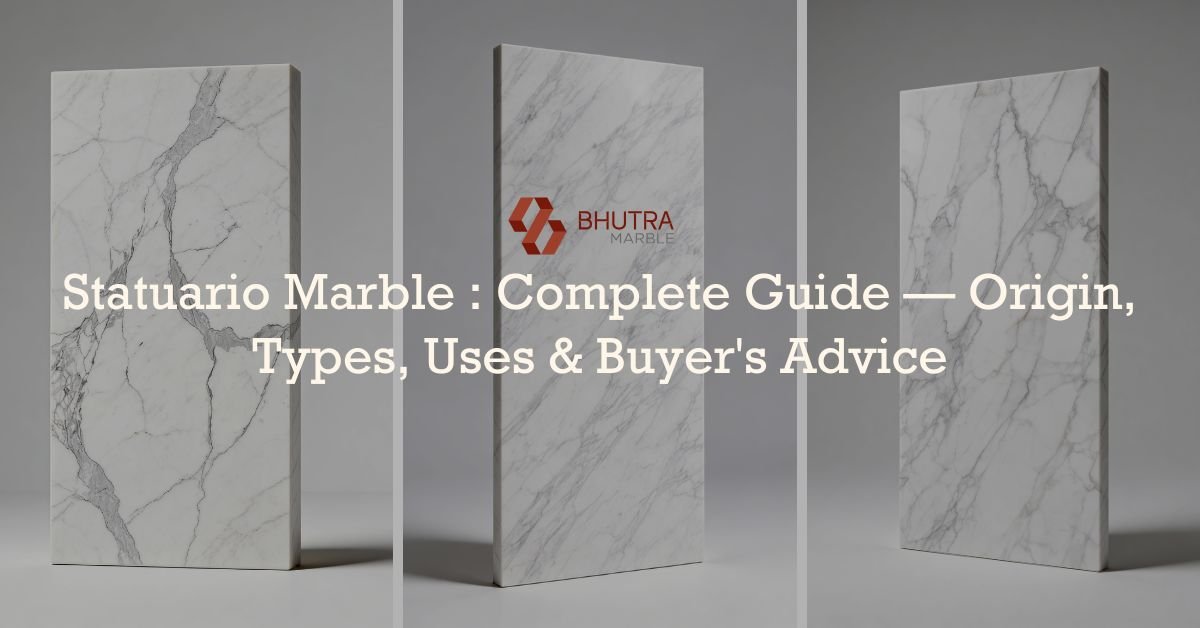
Statuario marble is a rare metamorphic stone — specifically a calcite-dominant white marble — quarried in a geographically limited zone in the mountains above Carrara in Tuscany, northern Italy. It is defined by two characteristics that set it apart from almost every other white marble in the world: an extraordinarily pure white background and a pattern of bold, graphic grey veins that move across the slab with a clarity and drama that no other marble variety reliably reproduces.
The name “Statuario” derives from the Italian word for statue. This is not a marketing label. This marble earned that name because it was the preferred material of Renaissance sculptors — including Michelangelo — who prized it for its uniform crystalline structure, which made it respond to a chisel with exceptional predictability and precision. The same properties that made it ideal for carving the human form make it ideal, centuries later, for the demanding requirements of polished architectural surfaces.
It belongs to the same geological family as Carrara and Calacatta marble. All three come from the Apuan Alps, all three are metamorphic in origin, and all three share similar mineralogical composition. But the similarities end roughly there. The specific zone of Statuario extraction yields a stone of notably different character — one with higher purity, more consistent whiteness, and a veining structure that is bolder and more architectural in nature.
Where Does Statuario Marble Come From?
The Apuan Alps and the Carrara Quarries
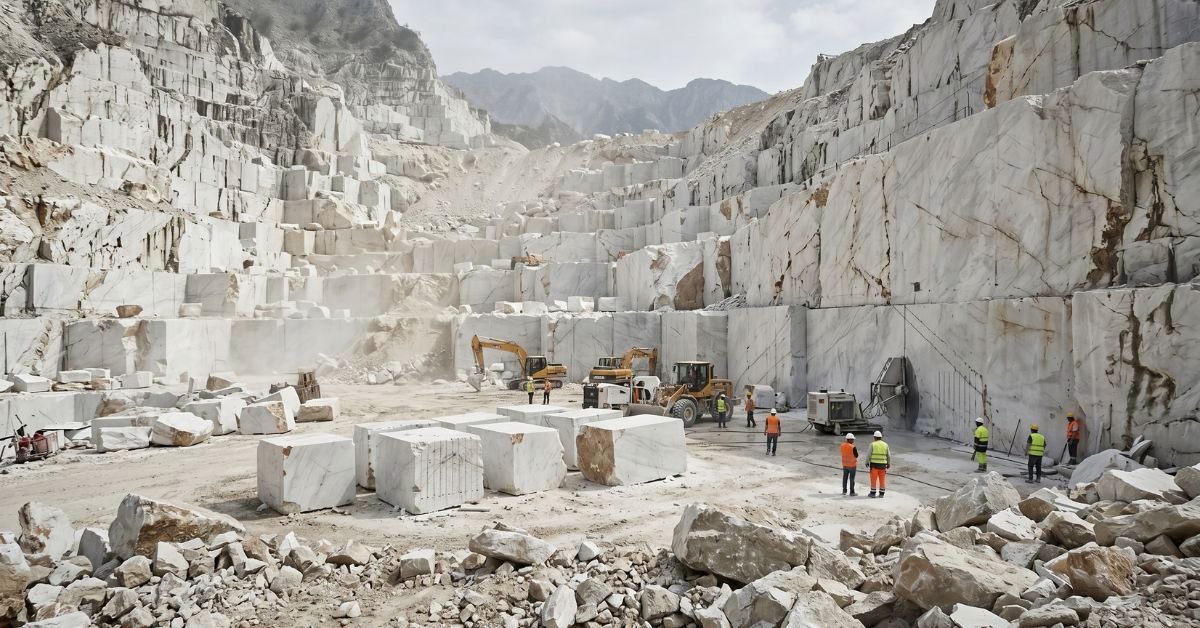
The Apuan Alps of Tuscany have been producing marble for over two thousand years. Carrara, the city at the center of this industry, gives its name to a region — not just a stone type. The quarries in and around Carrara have been active since Roman times and have supplied material to some of the greatest architectural achievements in Western history.
Statuario is quarried in a specific and relatively limited section of the mountain zone above Carrara — primarily in areas such as the Fantiscritti, Miseglia, and Torano basins. The geological conditions in these zones produced a particularly dense, fine-grained calcite stone with unusually low iron content. That absence of iron is part of what gives Statuario its signature brightness: iron oxidation is responsible for the warm yellow or golden undertones seen in other marbles. Statuario, with minimal iron, reads as cool and clean — a white that leans toward the appearance of snow or ice rather than cream.
Why the Origin Matters More Than You Think
Statuario marble origin is not just a provenance claim — it is a quality specification. Statuario marble from the Carrara region has a specific geological composition and crystalline density that influences how it polishes, how it holds a vein pattern, and how it responds to cutting and fabrication. Stone from other regions — even very white stone with grey veins — does not carry the same geological properties, even if it is sold under similar names.
In the Indian market particularly, this distinction matters enormously. There are white marbles quarried domestically and imported from Turkey, Greece, and China that are sold under names like “Indian Statuario” or “Statuario-look” marble. These are not the same stone. They may be beautiful materials in their own right, but they are not Statuario marble in the geological or historical sense of the word. A buyer who understands this distinction will make very different purchasing decisions than one who doesn’t.
What Does Statuario Marble Look Like?
The Signature White Background
The base color of authentic Statuario marble is white — but describing it simply as “white” is inadequate. The best grades of Bianco Statuario have a luminous, almost backlit quality. When polished to a mirror finish, the surface appears to hold light rather than merely reflect it. This quality comes from the stone’s crystalline structure at the microscopic level: the tightly interlocked calcite crystals refract light in ways that give premium slabs their characteristic depth.
Lower grades and sub-varieties may show a slightly warmer or softer white, and some varieties — particularly Statuario Venato — have a background with more movement. But whiteness and clarity are the benchmark against which all Statuario is measured: the whiter and purer the background, the rarer and more valuable the slab.
The Veining — What to Look For
Statuario’s veining is its most distinctive feature and, for many buyers, the primary reason they choose it over other white marbles. The veins are grey — ranging from a light graphite to a deep charcoal — and they appear in bold, linear strokes that cross the slab with purpose. Unlike the feathery, dispersed veining of typical Carrara marble, Statuario’s veins tend to be fewer in number but more emphatic. The Italian term for the large, sweeping veins in Bianco Statuario is bastoni — literally “big sticks” or “branches” — which gives you a sense of their visual character.
This is the fundamental design tension that makes Statuario so compelling: a maximally clean white ground interrupted by veins of significant weight and personality. It creates a surface that is simultaneously minimal and dramatic — one that works in a modern space as easily as it works in a classical one.
The Main Types of Statuario Marble
The Carrara quarries produce Statuario in several recognized grades and sub-varieties, and understanding these distinctions is essential before any purchase.
Bianco Statuario
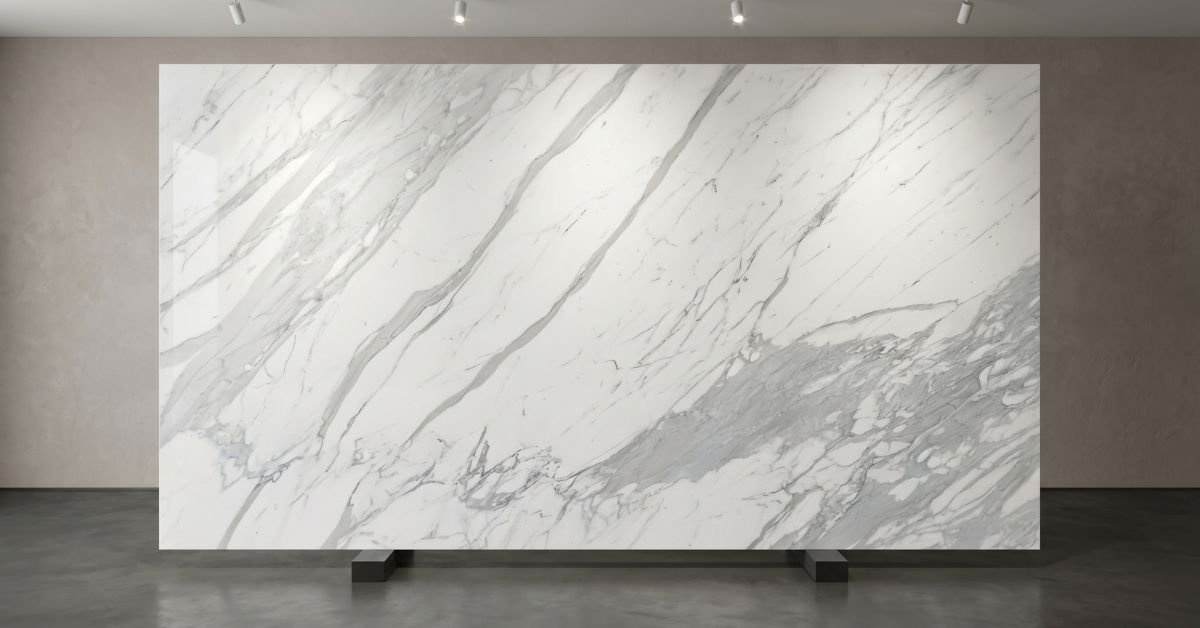
This is the pinnacle of the Statuario family and, by most assessments, one of the most valuable natural stones in the world. Bianco Statuario is characterized by its extreme whiteness, very low impurity content, and a small number of large, clearly defined grey veins. In the finest slabs, the white is almost uniformly pure, and the veins appear as bold calligraphic strokes across the surface — precise, confident, and deliberate. These are the slabs that command the highest prices and are the most difficult to source in quantity. When people talk about Statuario marble in a luxury architectural context, this is almost always the variety they mean.
Statuario Venato
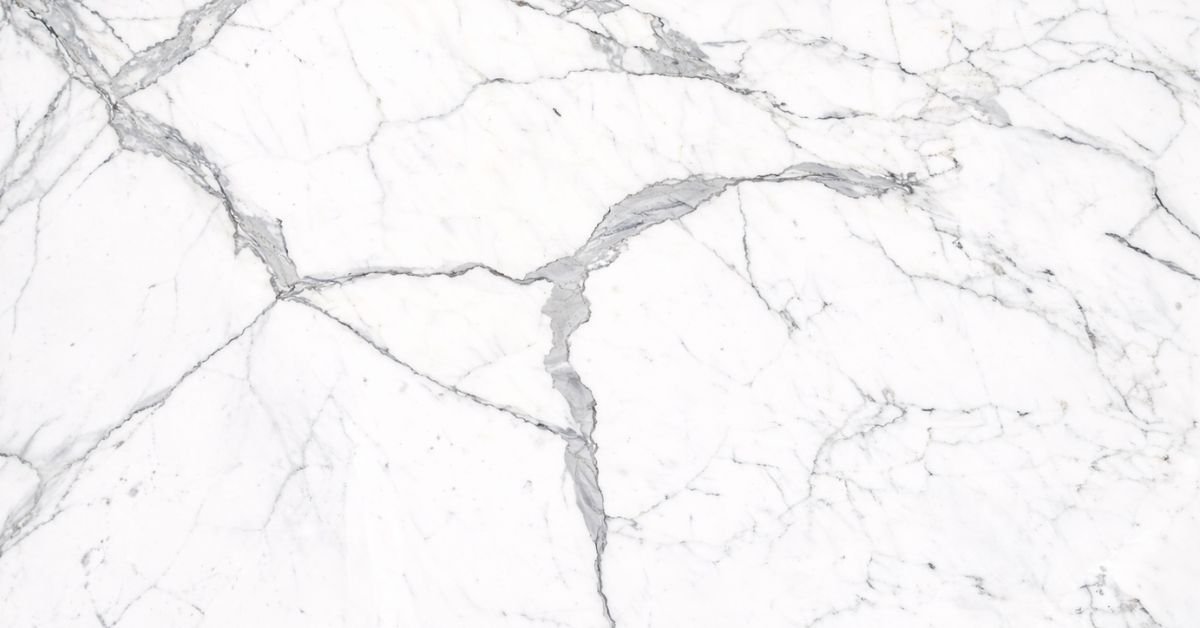
Venato (“veined”) is the more widely available grade. The background remains white, but the veining is more complex and distributed — fine networks of grey lines spread across the surface with more frequency and in more organic patterns than the bold bastoni of Bianco Statuario. Statuario Venato can be equally striking, but its character is different: where Bianco Statuario reads as bold and spare, Venato reads as intricate and richly patterned. Both are genuinely premium materials; they simply suit different design intentions.
Statuario Extra
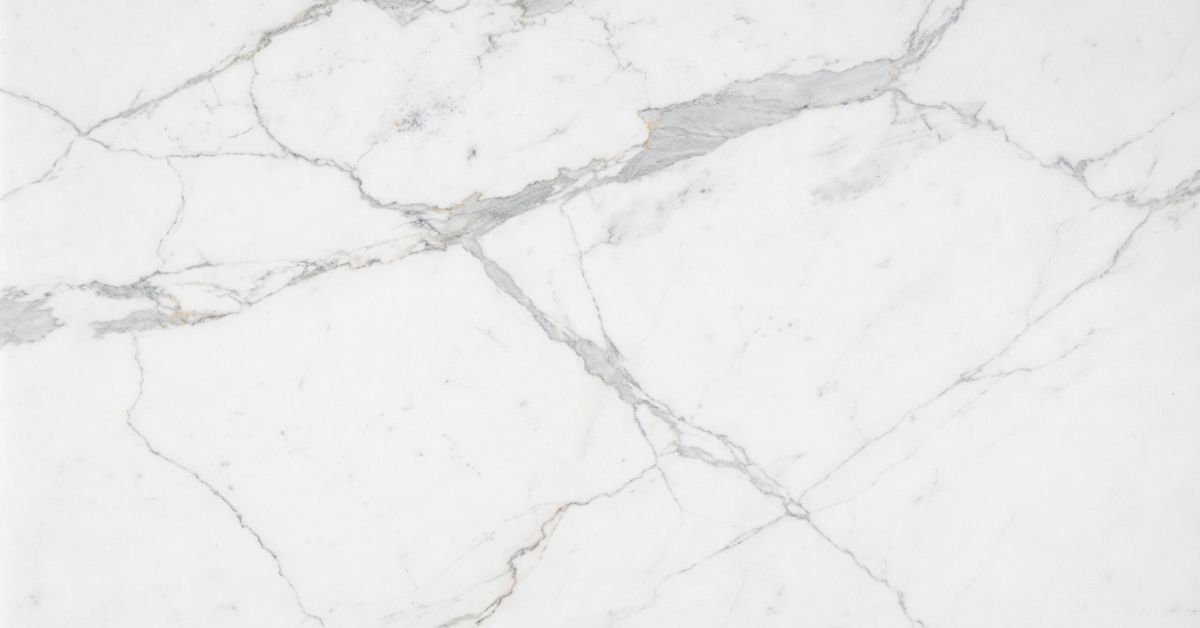
“Extra” denotes slabs of exceptional quality within the Venato family — pieces selected for their superior whiteness, consistency of veining, and absence of defects. In practice, Statuario Extra and Bianco Statuario are sometimes used interchangeably in the trade, though technically they describe different things. When a supplier offers “Statuario Extra,” it is worth asking for visual documentation of the specific slab, as the designation is not universally standardized.
Statuario Altissimo and Other Sub-Varieties
Statuario Altissimo comes from the higher-elevation Altissimo quarries in the Apuan range and is generally considered a distinct sub-variety with its own nuanced character. Statuario Apuano refers more broadly to the marble’s Apuan origin and is sometimes used to distinguish authentic Italian stone from lookalike materials. These names appear in specialist discussions and architectural specifications but are less commonly encountered by retail buyers in India.
Why Is Statuario Marble So Expensive?
The honest answer is: because genuine Statuario is genuinely rare. The quarry zones that produce high-quality Statuario are geographically constrained. The mountain is being worked. Extraction is expensive and increasingly regulated. And the volume of material that meets the exacting standards for Bianco Statuario — in terms of whiteness, veining character, and absence of defects — is a small fraction of everything extracted.
Demand, meanwhile, has never been higher. The global luxury construction market has grown substantially, and Statuario has become a signature material for five-star hotel lobbies, premium residential developments, and high-end retail environments around the world. Supply constraints meeting rising demand produces exactly what you’d expect: consistently high prices.
There is also a quality of workmanship embedded in the final product. Processing Statuario marble correctly — cutting slabs to preserve veining continuity, polishing to the correct grit sequence, bundling slabs so that consecutive pieces from the same block are kept together for matching — requires skill and care. The best Italian fabricators invest heavily in this, and that investment is reflected in the price.
If a price seems substantially below what the market commands for genuine Italian Statuario, it almost certainly is. That should be the first signal that either the origin or the grade of the stone is different from what is being claimed.
For the full case on why designers rank it at the top, see why Statuario is the best white marble
What Is Statuario Marble Best Used For?
Statuario is a premium interior material. It performs best in applications where its visual qualities can be seen and appreciated, and where it will receive appropriate care. It is not an outdoor or high-abrasion material.
Flooring
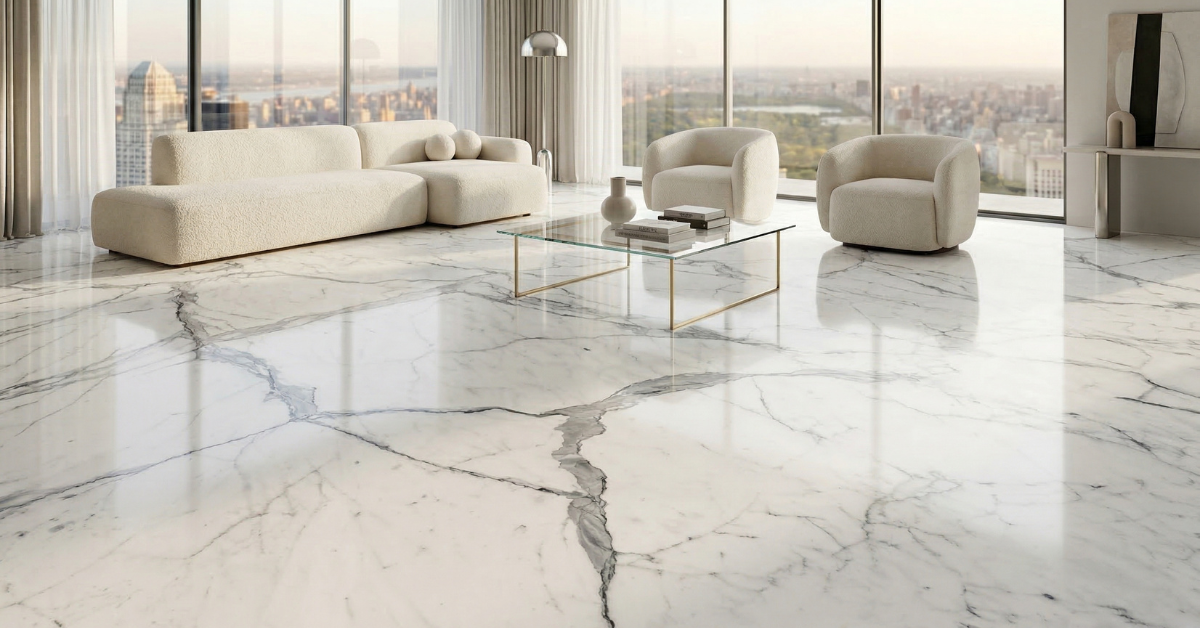
Statuario marble flooring creates an immediate and unmistakable impression. In large-format slabs — typically 1200×2400mm or larger — it produces a surface of extraordinary visual presence. Light reflects off the polished surface in ways that make rooms feel both expansive and refined. It is well-suited to living rooms, entrance halls, hotel lobbies, and showrooms.
One practical consideration: marble flooring requires sealing, appropriate footwear habits, and regular maintenance to retain its polish. In very high-traffic commercial environments, a honed or brushed finish may be more practical than a mirror polish, as it conceals micro-scratches better over time. For residential flooring in areas that see moderate foot traffic, polished Statuario is entirely manageable with proper care.
For detailed guidance on Statuario marble flooring, slab sizes, and installation considerations, see our dedicated [Statuario Marble for Flooring →]
Bathroom Walls and Vanities
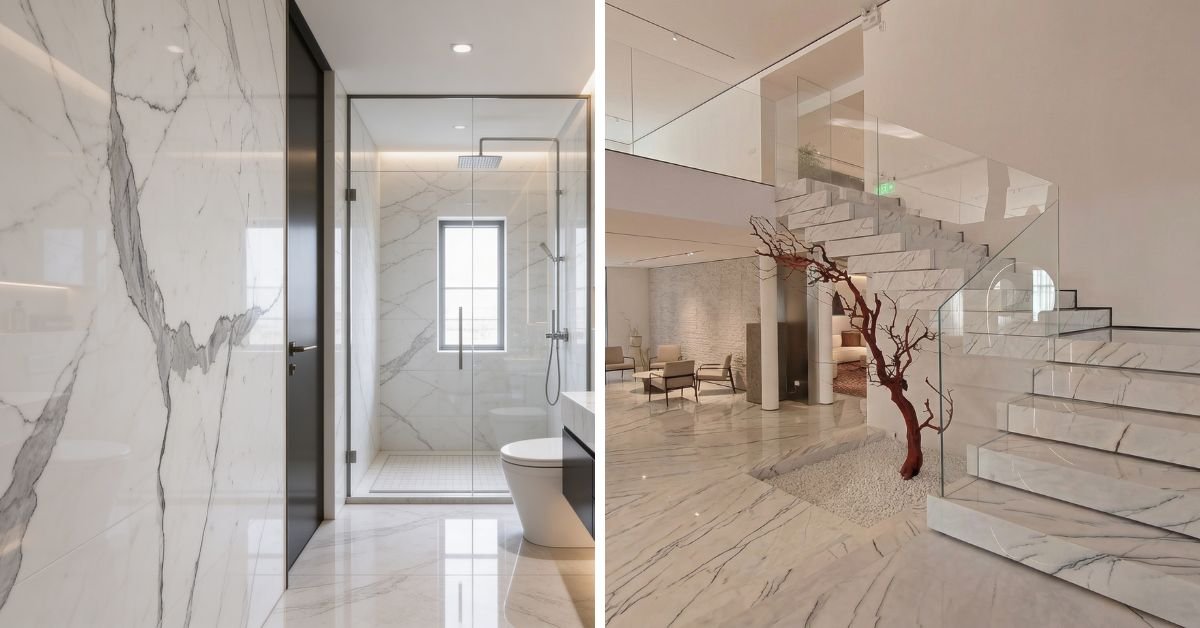
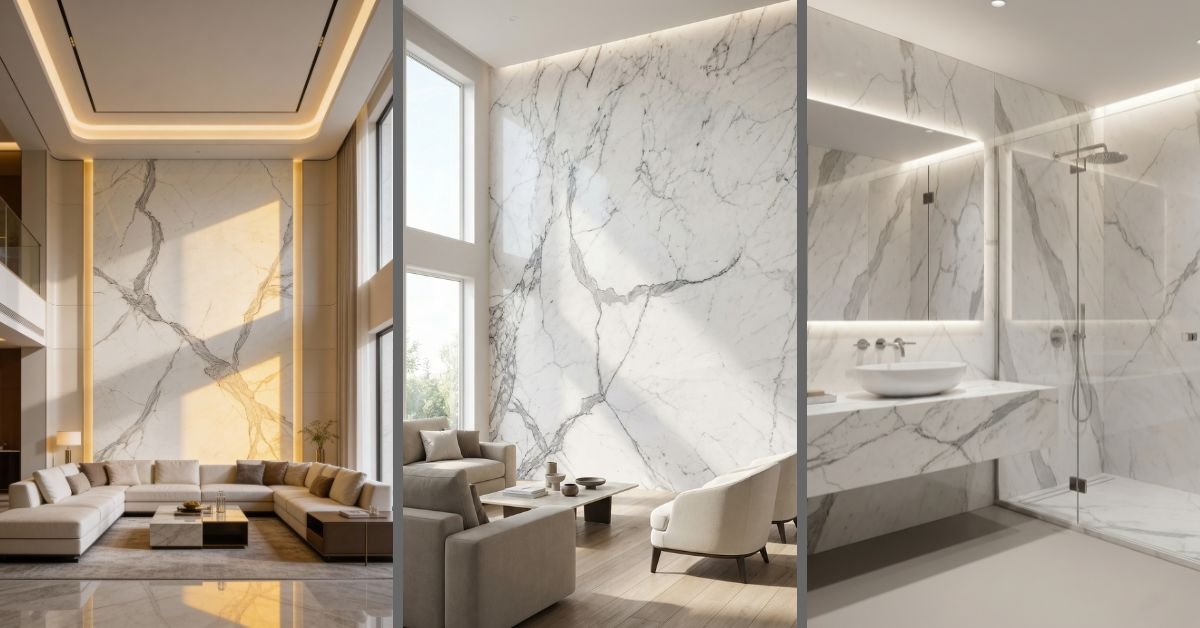
The bathroom may be where Statuario marble performs most convincingly. Its brilliant white surface reflects light and creates a sense of cleanliness and spaciousness that is difficult to replicate with any other material. Used on shower walls, vanity tops, and bath surrounds, it transforms a functional space into something genuinely luxurious. The combination of Statuario and matte gold or black fixtures has become a signature of high-end bathroom design globally.
Moisture resistance in marble is often overstated. Marble is porous and does absorb water over time without proper sealing. In bathroom applications, it should be sealed before installation and resealed periodically — the frequency depends on usage intensity. Properly sealed and maintained, Statuario is an excellent bathroom material. Neglected, it will stain, etch, and lose its finish.
Kitchen Countertops
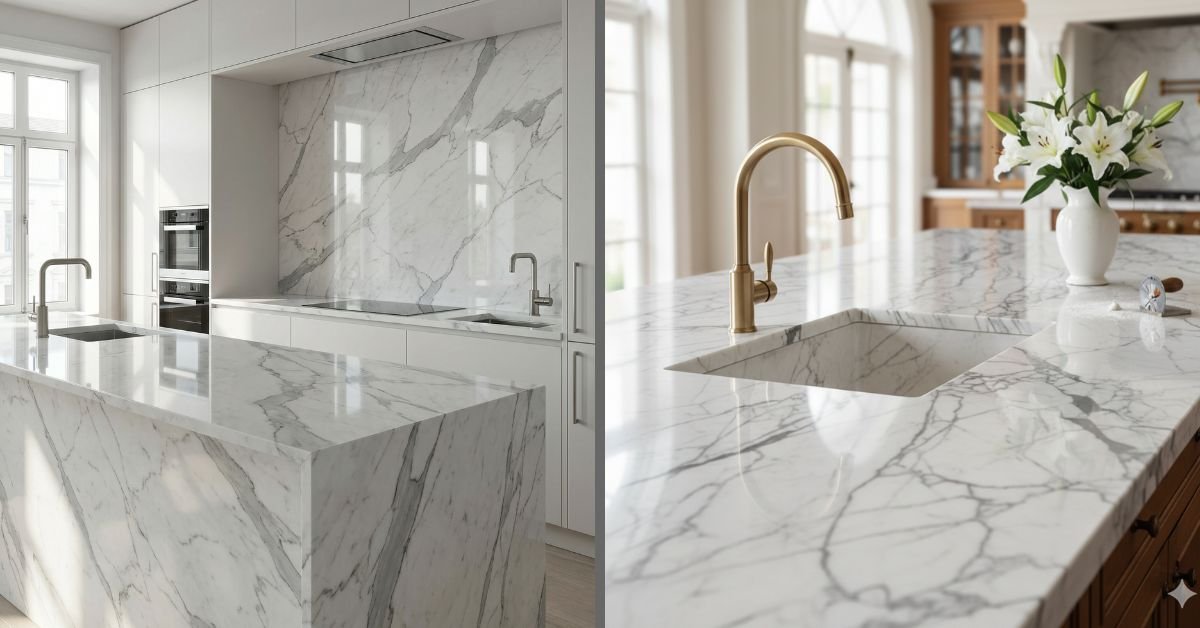
Kitchen countertops are where Statuario marble divides opinion among buyers and designers. There is no question about its beauty — a Statuario kitchen island is one of the most compelling things natural stone can produce. The practical question is whether a buyer is prepared for the maintenance realities of natural marble in a kitchen environment.
Acidic substances — citrus juice, vinegar, tomato — will etch an unsealed or poorly maintained marble surface. Heat, while resisted by the stone itself, can break down sealer coatings if pots are placed directly on the surface. These are not disqualifying concerns, but they require honest acknowledgment. Homeowners who are prepared to seal their stone, use cutting boards, and wipe spills promptly will enjoy Statuario countertops for decades. Those who prefer a set-it-and-forget-it approach might genuinely be better served by quartzite or engineered quartz, which can be sourced in Statuario-inspired aesthetics.
Full countertop marbles available in our [Statuario Marble for Countertop →]
Feature Walls and Cladding
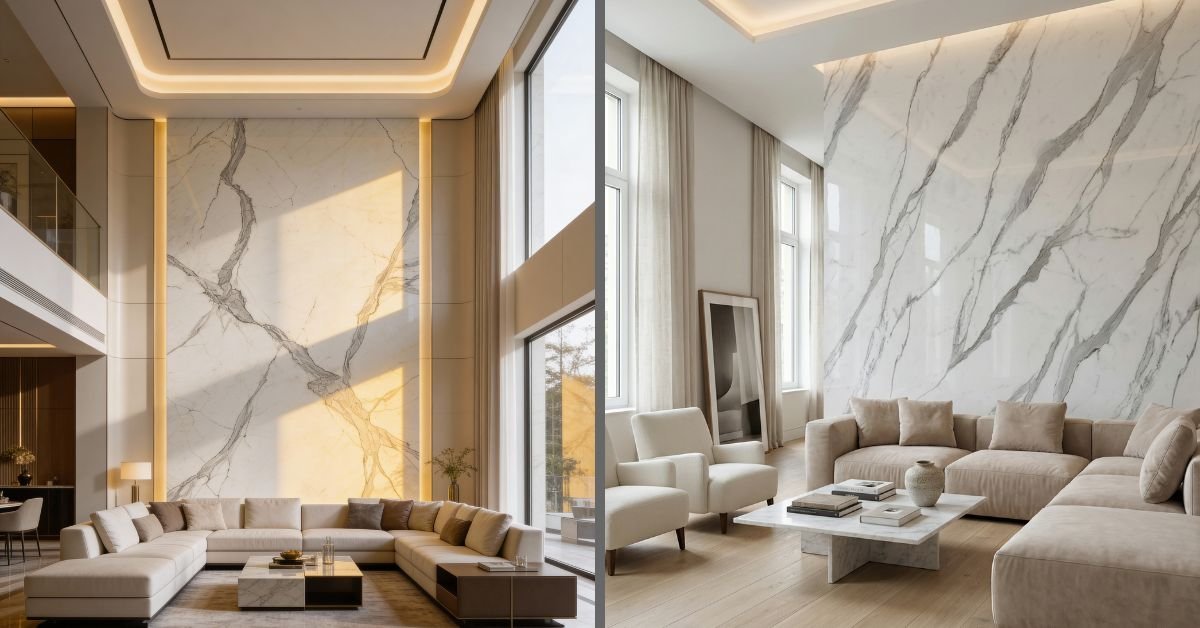
Wall applications are, in many ways, the ideal use for Statuario marble — particularly the finest grades of Bianco Statuario. Slabs used as feature walls behind television units, in elevator lobbies, or behind reception desks in commercial spaces create a visual impact that no paint, tile, or wallcovering can replicate. Wall cladding puts none of the weight-bearing or abrasion stress on the stone that flooring does, which means even thinner slabs can be used and the polished surface will remain pristine for many years.
Bookmatch Applications
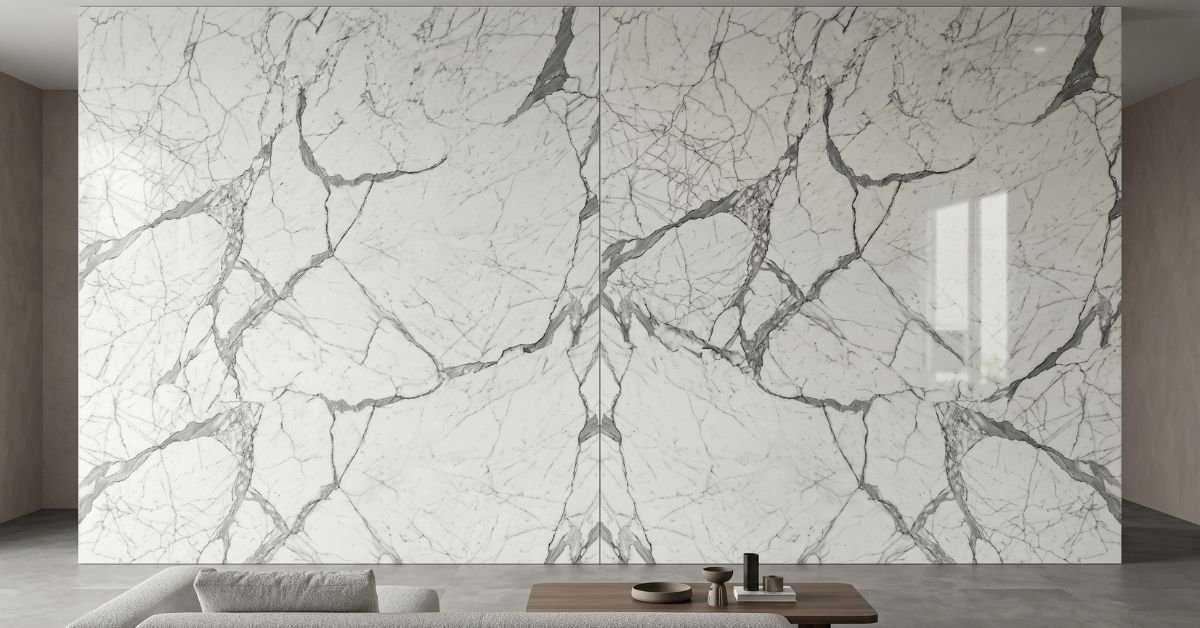
Bookmatching — the practice of opening consecutive slabs from the same block like the pages of a book, so that the veining mirrors itself symmetrically across the join — is one of the most powerful applications of Statuario marble. The bold, linear character of Statuario’s veining makes it particularly well-suited to this treatment. A bookmatched Statuario wall panel creates a composition of remarkable visual symmetry — almost like a natural Rorschach pattern on an architectural scale.
Bookmatching requires advance planning: the slabs must be sourced from the same block, kept in sequence, and installed in the correct orientation. Not every supplier has the inventory management to guarantee this. If bookmatching is a design priority, confirm your supplier’s ability to fulfill it before ordering.
Full slabs : [Statuario Marble Slabs →]
How to Identify Genuine Statuario Marble
Counterfeiting is not an exaggeration in the stone industry — it is a daily reality, particularly in markets like India where the demand for Italian marble is high and the price differential between genuine and imitation is significant. Here is what to look for.
Origin documentation
Authentic Italian Statuario marble should come with documentation of its quarry origin. Serious suppliers can provide this. If a supplier cannot or will not tell you precisely where the stone was quarried, treat that as a warning.
Background color quality
Hold the slab under good lighting. Genuine Statuario has a clean, cool white that reads clearly even under incandescent light. A yellowish tint suggests an older slab that has oxidized, a lower quality stone, or one that is simply not Statuario. Some warm-veined variants like Statuario Gold do exist, but the background should still be white — not cream or off-white.
Vein character
Authentic Statuario veining is natural — it has slight irregularity, organic movement, and depth. Printed or artificial veins (found in porcelain “statuario effect” tiles or resin composites) look uniform and flat. Under close examination, the difference is unmistakable. Genuine marble veins have depth; they appear to exist within the stone, not just on its surface.
Polish depth and reflectivity
A genuinely polished Statuario slab achieves a mirror-like finish that reflects clearly and with depth. A surface that looks shiny but slightly plastic or “surface-level” may have been treated with resins or coatings to compensate for porosity or surface defects.
Price sanity check
If a supplier is offering Statuario marble at a price dramatically below the established market rate for genuine Italian stone, something is almost certainly different about what they’re selling — either the origin, the grade, or both. Price is not a guarantee of authenticity, but an implausibly low price is a reliable signal of doubt.
Physical temperature
Natural stone, particularly dense metamorphic marble, feels distinctly cool to the touch even in a warm environment. This is a minor but genuine differentiator from engineered stone and porcelain products, which tend toward room temperature.
Common Mistakes Buyers Make
In this statuario marble complete guide, these mistakes are extremely common, and most of them are self-inflicted.
Conflating "white marble" with "Statuario marble."
Not every white marble with grey veins is Statuario. The specific origin and geological character of the stone determine what it is. Buying "white marble that looks like Statuario" is fine if that's what you want and you're paying accordingly — but paying Statuario prices for a lookalike is a costly mistake.
Ignoring slab bundles
Marble is a natural material. Every block produces a unique pattern. When you're purchasing for a large area — say, a floor or a feature wall — you need slabs from the same block or at least the same quarry batch to ensure reasonable visual continuity. Buying slabs from multiple lots without visual matching will produce an installation that looks inconsistent and amateurish, regardless of how expensive the stone is.
Overlooking thickness
Standard slab thickness for flooring is typically 18–20mm. Thinner slabs — 12mm or 16mm — may be offered at lower cost but are more vulnerable to cracking during handling and installation, particularly in larger formats. Always confirm thickness requirements for your specific application.
Not asking about resin treatment
It is common industry practice to fill minor natural fissures in marble slabs with clear or color-matched resin before polishing. This is acceptable and standard when disclosed. What is not acceptable is buying stone where resin has been used to hide significant structural defects. Ask suppliers directly about resin treatment and what it covers.
Skipping the sealing step
Many buyers install Statuario marble and never seal it — then are surprised when it stains. Sealing before installation is non-negotiable for kitchen and bathroom applications. The stone does not come pre-sealed from the quarry.
Is Statuario Marble Right for Every Project?
Honestly: no. Statuario marble is an exceptional material, but it is not the universal answer to every design problem. Here is a realistic assessment.
Good fit for Statuario:
- Luxury residential projects where budget is not the primary constraint
- Statement installations — feature walls, lobbies, reception areas — where visual impact is the primary goal
- Bathrooms with moderate to low daily traffic
- Kitchen countertops in households that are willing to maintain natural stone correctly
- Flooring in formal spaces (not high-traffic utility areas)
Consider alternatives if:
- Your project requires a completely zero-maintenance surface
- The space sees very heavy commercial foot traffic
- Budget is a significant constraint — there are beautiful marbles at lower price points that serve their purposes well
- The design calls for consistent, uniform patterning (marble by nature is variable; if you need exact repeatability, porcelain might serve you better)
- The installation environment is outdoors — marble is an interior stone for all premium applications
How Does Statuario Compare to Carrara and Calacatta?
All three stones come from the Carrara region of Italy. All three are white metamorphic marbles. Beyond those shared credentials, they are meaningfully different — in appearance, availability, and price.
Carrara is the most abundant of the three. Its background is grey-white to white, and its veining is characteristically delicate and distributed — fine, feathery lines that create a soft, textured appearance. It is the most affordable Italian marble and the most widely used in residential and commercial applications globally. It is an excellent material; it simply occupies a different tier from Statuario.
Calacatta is rarer than Carrara and commands a higher price. Its background is typically warmer — a bright white that often has cream or golden undertones — and its veining is bold and dramatic, sometimes showing warm gold or taupe tones alongside grey. Calacatta can be seen as occupying a visual space between Carrara (distributed, fine veining) and Statuario (bold, linear, grey veining). The two — Statuario and Calacatta — are often mentioned together as the two peaks of the Italian white marble market.
Statuario is the rarest and the most expensive. Its defining characteristics — the cool, brilliant white background and the bold, graphic grey veins — are unambiguous once you know what you’re looking at. It does not have the warmth of Calacatta; its aesthetic is cleaner, cooler, and more architecturally linear. If you are also comparing it with Michelangelo, read our detailed guide on Statuario vs Michelangelo Marble.
A Note on Indian Statuario Marble
The Indian stone market uses the term “Indian Statuario marble” to describe domestically quarried white marble varieties — primarily from Rajasthan — that bear a visual resemblance to Italian Statuario. These stones are real, often beautiful, and serve a very legitimate purpose in the market: they bring the aesthetic of Statuario within reach of projects that cannot sustain Italian stone pricing.
What they are not is geological Statuario marble. The crystalline density, mineralogical composition, veining character, and surface performance of Indian white marble are different from Italian Statuario. For some projects, this difference is entirely acceptable. For others — particularly those where authenticity and long-term performance are priorities — it matters significantly.
The important thing is to buy what you think you’re buying. A supplier who sells Indian white marble as Indian Statuario, clearly disclosed at Indian Statuario pricing, is operating honestly. A supplier who implies you’re getting Italian stone at Indian prices is not.
FAQ :-
Statuario marble is a high-grade Italian white marble quarried in the Apuan Alps above Carrara, Tuscany. It is defined by its exceptionally pure white background and bold grey veining, and has been prized for centuries in both sculpture and architecture.
Exclusively from specific quarry zones in the Carrara mountain region of northern Italy. It is not quarried in significant commercial quantities anywhere else in the world, which contributes to its rarity and value.
Yes. Among natural marbles, it consistently ranks among the most expensive. Italian Statuario slabs are priced significantly higher than most other white marbles due to limited quarry availability and strong global demand.
Both come from the Carrara region but have distinctly different appearances and price points. Carrara has a grey-white background with fine, distributed veining. Statuario has a brighter, purer white background with bold, graphic grey veins. Statuario is significantly rarer and more expensive.
Calacatta has a warmer white background and bolder, more irregular veining that often includes warm gold or taupe tones. Statuario has a cooler, brighter white and more linear, consistently grey veining. Both are premium stones; the choice comes down to aesthetic preference and application.
Yes, when properly installed and maintained. It creates exceptional visual impact in formal living areas, hotel lobbies, and entrance halls. It requires sealing and appropriate cleaning protocols to retain its finish over time.
Statuario is arguably at its best in bathroom applications — particularly on walls, vanity tops, and bath surrounds, where it transforms the space without the high-abrasion demands of flooring. Sealing is essential.
Yes, with the right expectations. Marble is not as chemically resistant as granite or engineered quartz. With regular sealing and careful use, a Statuario countertop can remain beautiful for many years. For buyers who prefer a truly maintenance-free surface, quartzite or quartz alternatives may be more practical.
Look for documented Italian origin, cool brilliant-white background, bold natural grey veining with visible depth, and a polish quality that reflects clearly. Be cautious of unusually low pricing, yellowish tones, or veining that looks printed or perfectly uniform.
In India, it is typically referred to as "Statuario Sangemarmar" (संगमरमर) or simply "Statuario marble." There is no standardized Hindi name specific to this variety; it is almost universally known by its Italian name across the Indian stone industry.
In most professional usage, yes — "white Statuario" refers to the same stone. The qualifier "Italian" is used specifically to distinguish it from Indian Statuario, which is a domestic white marble marketed under a similar name but with different geological properties.