
Imported White Marble: Premium Varieties, Prices & Selection Guide for Kishangarh
Discover premium imported white marble at Bhutra Marble in Kishangarh. Compare Italian and Greek varieties like Statuario, Carrara, Michelangelo and Volakas, understand pricing, choose the right slab, and learn how to care for luxury marble surfaces
What Counts as Imported White Marble?
Imported white marble refers to natural stone quarried outside India, typically from the famed marble regions of Italy, Greece, Turkey and Vietnam. Unlike generic “white marble,” these stones are chosen for their silky backgrounds, dramatic veining and ability to take a mirror-like polish. Names such as Statuario, Carrara, Michelangelo and Volakas have become synonymous with luxury because of the limited quarries that produce them and the craftsmanship required to process them. Imported slabs often travel thousands of miles before arriving at Kishangarh, which contributes to their exclusivity and the need for a specialist supplier.
If you want to compare imported options with the broader range of white marble available in Kishangarh, explore our detailed guide on White Marble in Kishangarh.
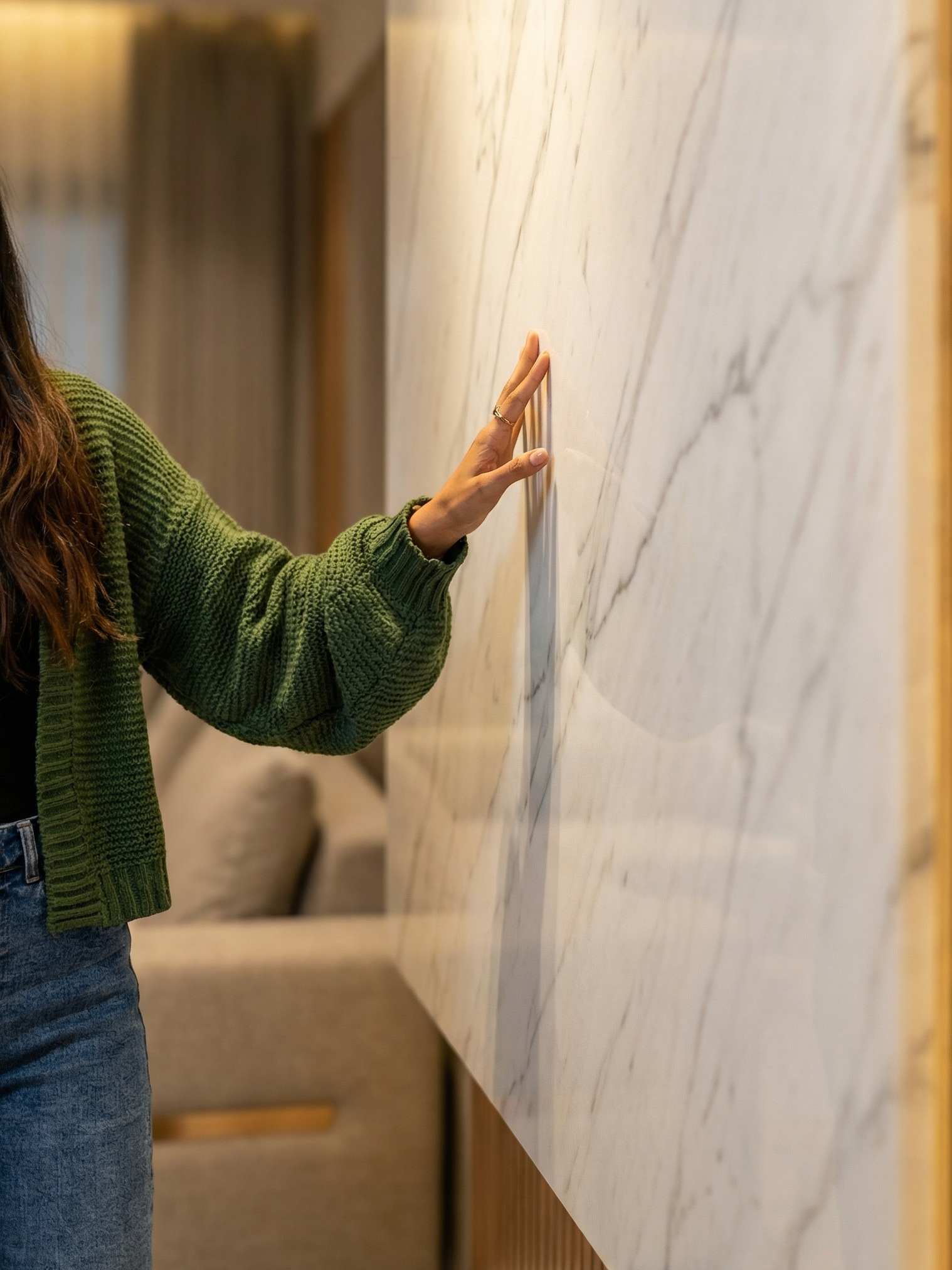
Imported vs Indian White Marble: Key Differences
For buyers who are still comparing Indian and imported white marble options, our White Marble in Kishangarh page gives a wider overview of available white marble choices.
Factors Affecting Imported Marble Price
Imported white marble is a premium material, and understanding what drives its price helps you budget smarter :
Source and rarity
Stones like Statuario and Thassos come from small quarries with limited annual output. Limited supply increases cost
Import duties and logistics
Freight charges, customs duties and currency fluctuations all contribute to the landed price of each slab.
Slab size and thickness
Standard imported slabs are 18–20 mm thick, but extra‑thick or oversize pieces command a premium because they require careful extraction and shipping.
Finishing and grading
Higher‑grade blocks yield slabs with fewer natural flaws, uniform background colour and more dramatic veining. A flawless high‑gloss polish or honed finish takes extra time and skill, adding to the cost.
Installation
Imported marble often requires specialised adhesives, nylon mesh backing and expert polishing. Labour costs for laying and finishing imported stone can exceed those of domestic marble.
Top Imported White Marble Varieties
Statuario Marble
―
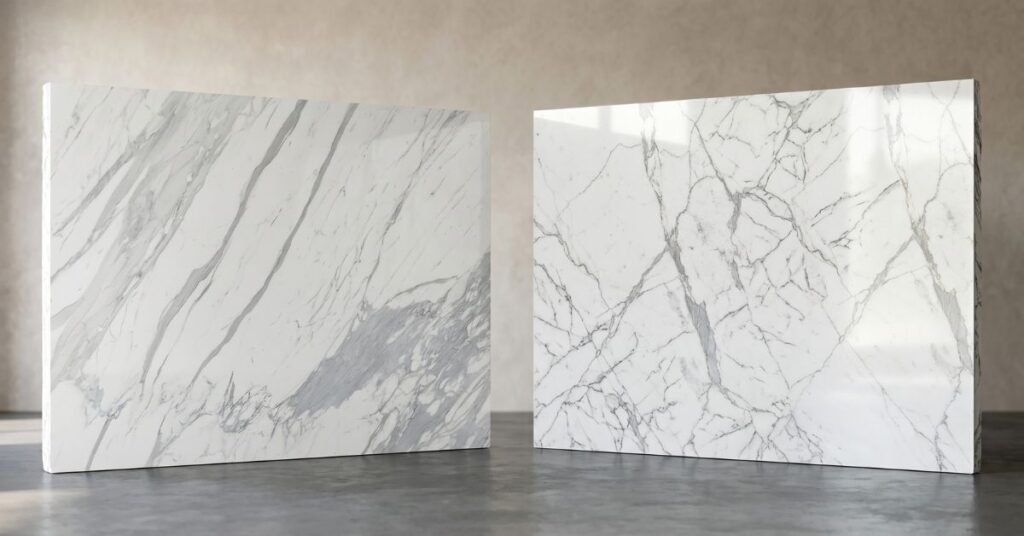
Statuario is the crown jewel of Italian marble. It features a luminous white background streaked with bold, grey veins that look as if an artist has painted across the stone. Because it is quarried in limited quantities in the Apuan Alps of Italy, each slab feels exclusive. Statuario is ideal for feature walls, book‑matched installations and statement floors in luxury villas and high‑end hotels. Due to its rarity and visual impact, expect prices in the upper tier of the imported range and plan for professional installation.

Carrara Marble
―
Carrara marble comes from the same region as Statuario but offers a softer look with a greyish‑white base and fine, feathery veining. It is more widely available and therefore more affordable. Carrara has been used for centuries in sculptures and architecture, from Michelangelo’s David to modern kitchens. Its subtle pattern makes it versatile for countertops, backsplashes and bathroom floors. While not as flashy as Statuario, it provides a classic, timeless appeal without the highest price tag.
Michelangelo Marble
―
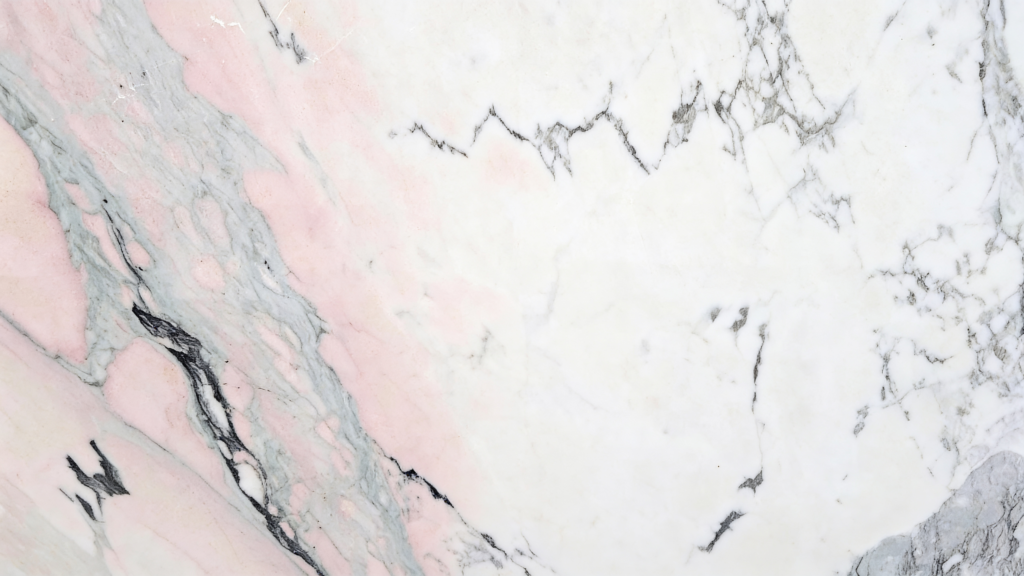
Michelangelo marble (also known as Michael Angelo or Michelangelo Bianco) combines elegance with approachability. Slabs display a graceful white background with delicate grey movements that lend a refined, modern feel without overpowering a space. Its gentle veining makes it suitable for large flooring areas, wall cladding and even furniture pieces. Because the pattern is understated, Michelangelo marble pairs well with wood, metal and other natural materials, creating a sophisticated, cohesive design.
Thassos and Namibia White
―
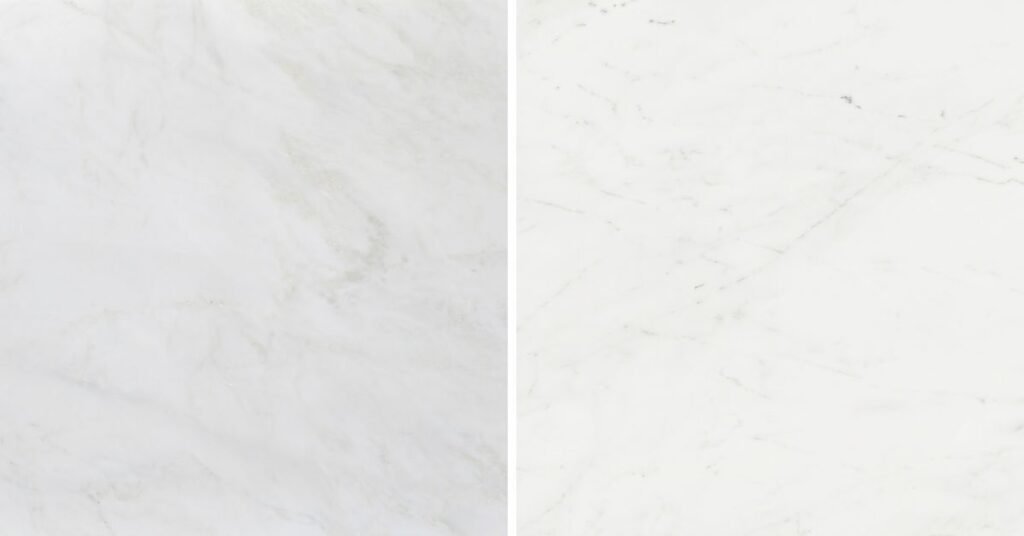
Thassos marble is mined from the Greek island of Thassos and is renowned for its pure, crystalline white appearance. With virtually no veining, it’s favoured for minimalist designs that require an uninterrupted surface. Namibia White, quarried in Africa, offers a cooler white tone with very subtle grey veins. It provides a fresh alternative to European imports while still delivering the clarity and polish expected in luxury interiors. Both varieties are niche choices that lend exclusivity to bespoke projects.
Volakas Marble
―
Volakas marble originates from northern Greece and is prized for its white base interwoven with flowing grey veins. These patterns vary from subtle wisps to pronounced ribbons, allowing you to choose a slab that matches your aesthetic. Volakas is often selected for statement staircases, fireplace surrounds, bathroom walls and premium flooring. It stands out for its combination of elegance and durability; when properly sealed, it resists staining and remains bright for years.
Choosing the Right Imported White Marble Slab
Selecting imported white marble is both an art and a science. Begin by looking at the colour consistency and veining pattern; each slab is unique, so bring home photos or samples and compare them under the lighting conditions of your space. Decide whether you prefer bold contrast, subtle movement or a virtually vein‑free look. Check the slab’s thickness (18–20 mm is standard for imports) and inspect edges for any hairline fissures or filler. You should also decide between a polished finish, which creates a mirror‑like shine, or a honed finish, which offers a softer, matte appearance.
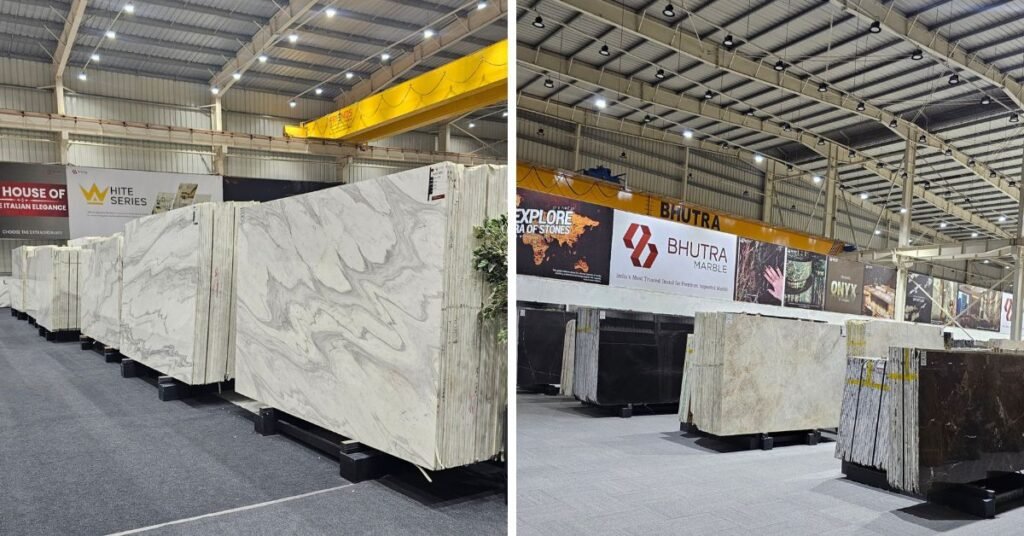
Always view the full slab in person before finalising your purchase. Small samples seldom reveal the character of the entire block. At Bhutra Marble’s Kishangarh showroom you can inspect dozens of imported slabs side by side, making it easier to choose the tone and veining that best complement your design. Our consultants can guide you through matching slabs for book‑matching, selecting similar veining patterns across multiple pieces and coordinating them with other materials in your project.
Applications: Where Imported White Marble Works Best
Feature Floors & Statement Areas
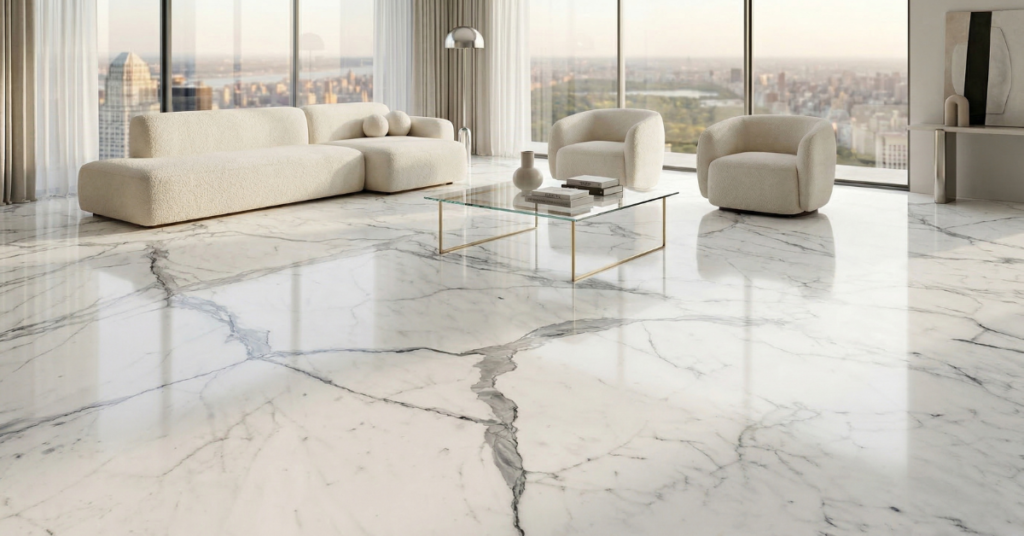
Imported white marble shines in areas where you want to make a bold impression. Use Statuario or Volakas on the floor of an entry hall, the central portion of a living room or around a grand staircase. The dramatic veins create visual movement, drawing the eye while conveying luxury. These stones are less suited to high‑traffic zones like kitchens and patios, where Indian marble’s hardness and lower maintenance requirements are preferable.
Kitchens & Bathrooms
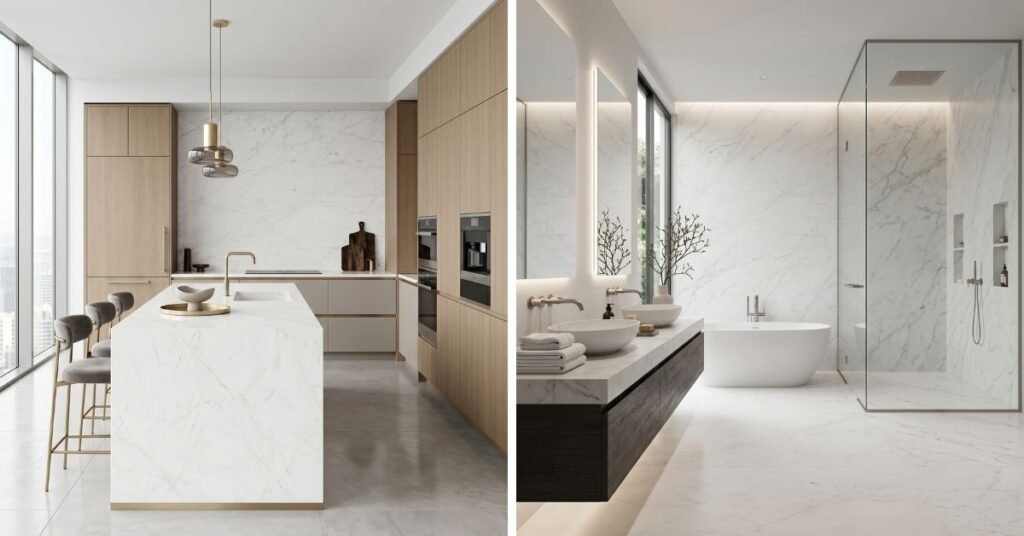
In kitchens, imported marble is best reserved for countertops, islands or decorative backsplashes, not heavy‑use flooring. Seal worktops regularly and avoid acidic spills to prevent etching. In bathrooms, use imported marble for vanity tops, shower walls and tub surrounds to create a spa‑like atmosphere. Thassos and Namibia White marbles lend themselves well to minimalist, all‑white bathrooms, while Carrara brings a more classic feel.

Wall Cladding & Accent Walls
Hotel lobbies, reception areas and upscale residences often feature imported marble on feature walls or column cladding. The contrast of bold veining against a smooth background makes walls feel sculptural. Carrara and Michelangelo marbles work beautifully for subtle, elegant accent walls, while Statuario and Volakas add drama. When cladding walls, ensure proper anchoring and sealing to prevent moisture penetration.
Caring for Imported White Marble
Maintaining imported white marble ensures it stays pristine for years. Dust surfaces regularly and wipe them down with a soft cloth and pH‑neutral stone cleaner. Avoid acidic or abrasive cleaners that can etch the surface. For flooring and countertops, apply a high‑quality sealer during installation and reapply every six to twelve months, depending on the stone’s porosity. Wipe up spills promptly, especially wine, citrus and oil, which can stain soft marble.
To prevent yellowing or dullness, protect your stone from prolonged exposure to moisture and direct sunlight. In high‑traffic areas, use rugs or mats to minimise scratching. Minor scratches or stains can often be buffed out by a professional polisher. Investing a little time in routine care will keep your imported marble looking luminous and luxurious.
Bhutra Marble, Kishangarh
KH NO 228, 194, Makrana Road, Khatoli, Kishangarh, Rajasthan
Walk-Ins Welcome
Open Daily: 10:00 AM – 7:30 PM
On-Site Parking Available
On-Site Parking Available
Why Buy Imported White Marble from Bhutra Marble
Purchasing imported marble is a significant investment, and working with an experienced supplier makes all the difference. Bhutra Marble has earned a reputation for sourcing some of the finest imported slabs available in Kishangarh. We maintain a curated collection of Statuario, Carrara, Michelangelo, Volakas, Thassos and Namibia White marbles, each selected for its colour purity, vein structure and structural integrity.
Our showroom offers buyers the chance to compare imported and Indian white marble side by side. Our team of specialists provides technical guidance on slab selection, thickness, finishing and installation. We also handle logistics, from secure transport to professional laying and polishing. When you choose Bhutra Marble, you gain access to decades of expertise and a commitment to quality that ensures your investment not only looks stunning but lasts.
Frequently Asked Questions
Imported white marble is quarried outside India and is known for its soft, refined base colour and striking veining. Indian white marble is denser and harder, making it better suited for heavy‑traffic floors. Imported varieties require more maintenance but offer unmatched luxury.
For feature areas and luxury interiors, imported marble provides a depth of colour and veining that local stones cannot replicate. The higher price reflects quarry rarity, transportation and finishing costs. If your project demands a premium look, the investment is justified.
Choose based on your design goals and budget. Statuario creates bold statements, Carrara offers classic elegance, Michelangelo delivers subtle sophistication, and Volakas sits between drama and refinement. Thassos and Namibia White are ideal for ultra‑minimalist designs.
Imported slabs typically range from 18–20 mm thick. For countertops and floors, stick to these thicknesses for structural stability. Polished finishes provide a mirror‑like shine, while honed finishes offer a softer look with better slip resistance.
Yes, but only in areas where you want a statement and where foot traffic is moderate, such as formal living rooms or entry halls. For busy kitchens and outdoor patios, Indian marble or granite will perform better.
Clean regularly with pH‑neutral stone cleaner, seal surfaces every six to twelve months, and avoid acidic spills. Quick attention to stains and scratches will extend the life of your marble.
Because imported marbles are more porous than many Indian stones, they can absorb liquids. Promptly wipe spills and use a high‑quality sealer to reduce the risk of stains.
Visit Bhutra Marble’s showroom in Kishangarh to view a curated selection of imported white marble. Our team will help you compare varieties, understand pricing and select the right slabs for your project.
Ready to Choose Your Imported Marble?
Imported white marble transforms ordinary spaces into showcases of elegance. If you’re ready to explore premium Statuario, Carrara, Michelangelo, Volakas or other imported stones, visit our Kishangarh showroom or contact us. Our consultants will guide you through selecting, purchasing and caring for the perfect slab, ensuring your investment reflects both luxury and lasting quality.