Natural Italian Marble
- Home
- Italian Marble
- Statuario Marble
Statuario Marble — The Complete Guide (Price, Types & Uses)
If you've ever walked into a luxury hotel lobby and stopped to look at the floor, there's a fair chance you were looking at Statuario marble. It has that kind of effect. White, dramatic, with bold grey veining running across it like brushstrokes — it doesn't just sit in a room, it defines the room.
This page covers everything you actually need to know about Statuario marble — what it is, how much it costs in India, the different types, and how to choose the right one for your project. It is one of the most premium choices in the Italian marble category.
Statuario Marble at a Glance
A quick snapshot for buyers who want to understand Statuario marble before comparing slabs, price, finish, and application.
Carrara, Tuscany, Italy
White Base, Bold Grey Veining
Flooring, Bathroom, Countertop, Feature Wall
Full Slabs & Cut-to-Size Options
Kishangarh, Delhi, Ahmedabad, India
Buyer note : Don’t finalise Statuario marble only from catalogue photos. Always compare actual slabs, vein movement, thickness, polish, and lot variation before selection.
What Is Statuario Marble?
Statuario marble (also sometimes spelled "Satvario" in the Indian market) is a natural white marble quarried from the Carrara region in Tuscany, Italy. It belongs to the same family as Carrara and Calacatta marble, but it stands apart because of its whiter base and thicker, more pronounced grey veining.
The name comes from "statua" — Latin for statue — because this was the marble Renaissance sculptors like Michelangelo preferred for their finest work. It's that old, that prestigious.
Italian Statuario marble is considered one of the rarest and most expensive marbles in the world. The quarries in Carrara produce limited quantities each year, which keeps its price consistently high. What's sold in India as "Indian Statuario marble" is a domestically quarried stone that mimics its look but differs in density, vein sharpness, and longevity. For buyers comparing Italian marble in Kishangarh, Statuario is usually seen as one of the most premium white marble options.

Types of Statuario Marble
Not all Statuario looks the same. Once you start exploring, you'll find several distinct varieties:
White Statuario Marble is the classic — bright white background with bold, flowing grey veins. As a premium imported white marble, this is what most people picture when they hear the name. It works beautifully for flooring, bathrooms, and countertops.
Gold Statuario Marble (also called Golden Statuario) has a warm ivory or cream base with golden-brown veining. It gives a richer, warmer look than the standard white version and pairs well with wooden interiors.
Brown Statuario Marble leans deeper in tone — earthy veins on a warm white or off-white base. It's increasingly popular for dining tables and feature walls.
Beige Statuario Marble is softer and more neutral. It doesn't demand attention the way white statuario does, which makes it a good choice for larger flooring projects where you want elegance without being overpowering.
Grey Statuario Marble flips the script — a greyish base with lighter or darker veining. It reads as modern and minimal, and interior designers often use it for bathroom cladding.
Black Statuario Marble is a bold departure from the traditional. With a near-black base and silver or white veining, it's dramatic and typically used as an accent — a feature wall, a fireplace surround, or a statement countertop.
Calacatta Statuario and Arabescato Statuario are premium sub-varieties with more intricate, branching vein patterns. These are among the most expensive options and are usually booked-matched for high-end projects.
Statuario Extra Marble is a grade classification — it refers to the finest, most consistent slabs with minimal imperfections. If you're paying top price, ask specifically for Statuario Extra.
Crystal Statuario Marble has a glassy, almost translucent quality when polished. It's one of the rarer finishes and tends to be used in luxury residential projects.
Statuario Marble Price in India
This is where things get practical. Statuario marble price varies considerably depending on origin, grade, finish, and thickness. For a broader cost comparison, you can also check our Italian marble price in India guide.
Italian Statuario marble price in India typically starts around ₹700–₹1,200 per sq ft for standard slabs and can go well above ₹2,000–₹3,000 per sq ft for Statuario Extra or premium bookmatched slabs. Block prices from Italy are quoted in euros per cubic meter and fluctuate with import duties.
Indian Statuario marble (quarried domestically and processed to mimic the Italian look) is significantly more affordable — usually ₹150–₹400 per sq ft depending on quality and finish. The best Indian versions come from Kishangarh in Rajasthan, which is the marble capital of India.
Statuario marble price per square foot for tiles (as opposed to slabs) tends to be a bit lower because tiles are thinner and involve less material waste. Kajaria Statuario tiles and Simpolo Statuario tiles are popular choices if you want the Statuario look without the natural marble budget — these are ceramic/vitrified tiles printed to mimic the stone's texture. Kajaria Statuario tiles price generally ranges from ₹70–₹180 per sq ft.
Statuario marble price in Delhi is slightly higher than in Kishangarh due to transportation and middlemen. If you're sourcing directly from a Kishangarh factory or dealer, you can save 15–25% on the same material.
For Dubai and international buyers, Statuario marble price in Dubai is quoted in AED and depends heavily on the slab size, grade, and whether it's Italian or Indian origin.
Where Statuario Marble Is Used
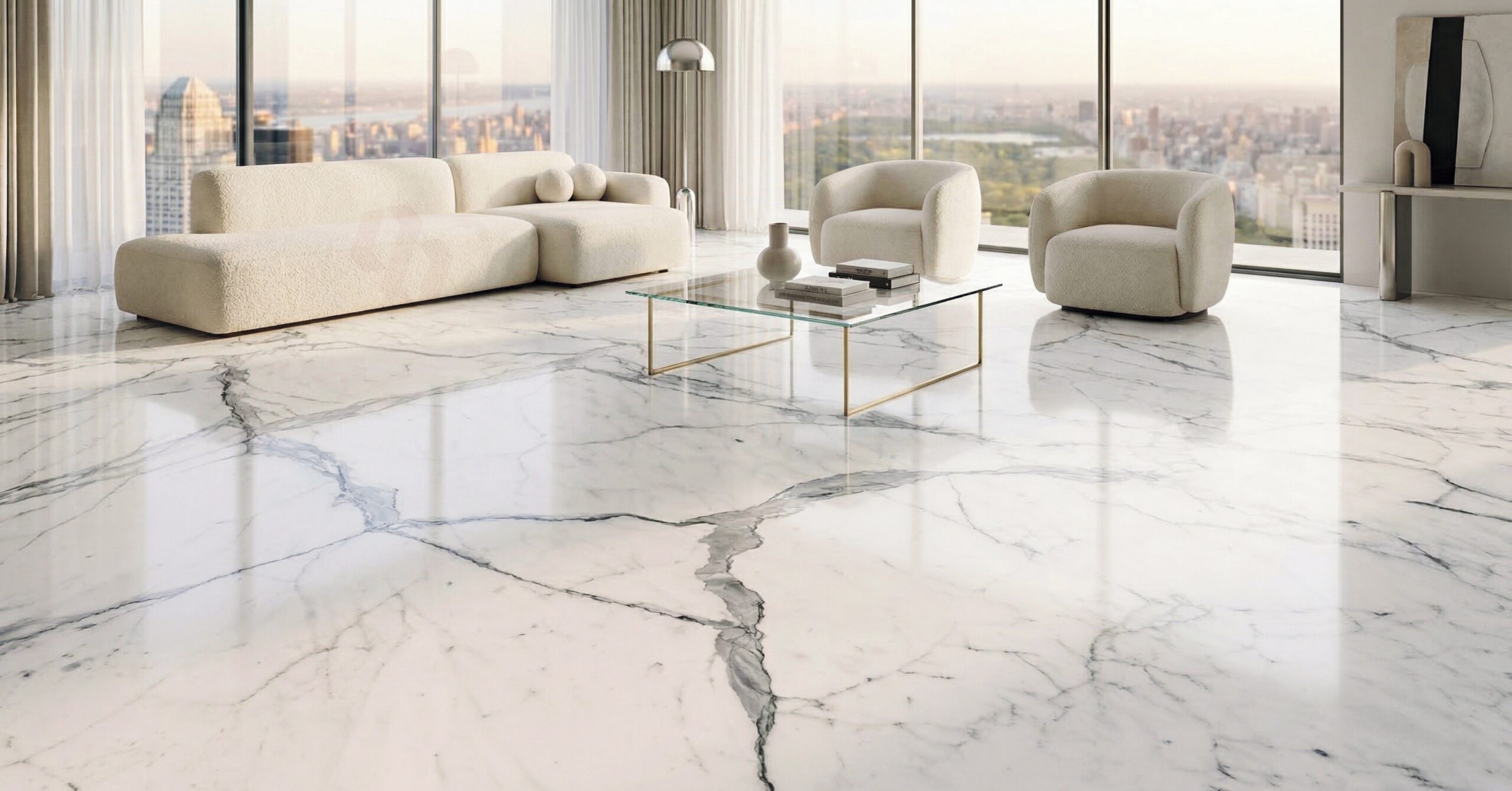
Flooring
Flooring: Statuario marble flooring is perhaps its most common application in India. Large format slabs polished to a mirror finish make spaces look significantly bigger and more luxurious. Living rooms, hotel lobbies, and office reception areas use it extensively.
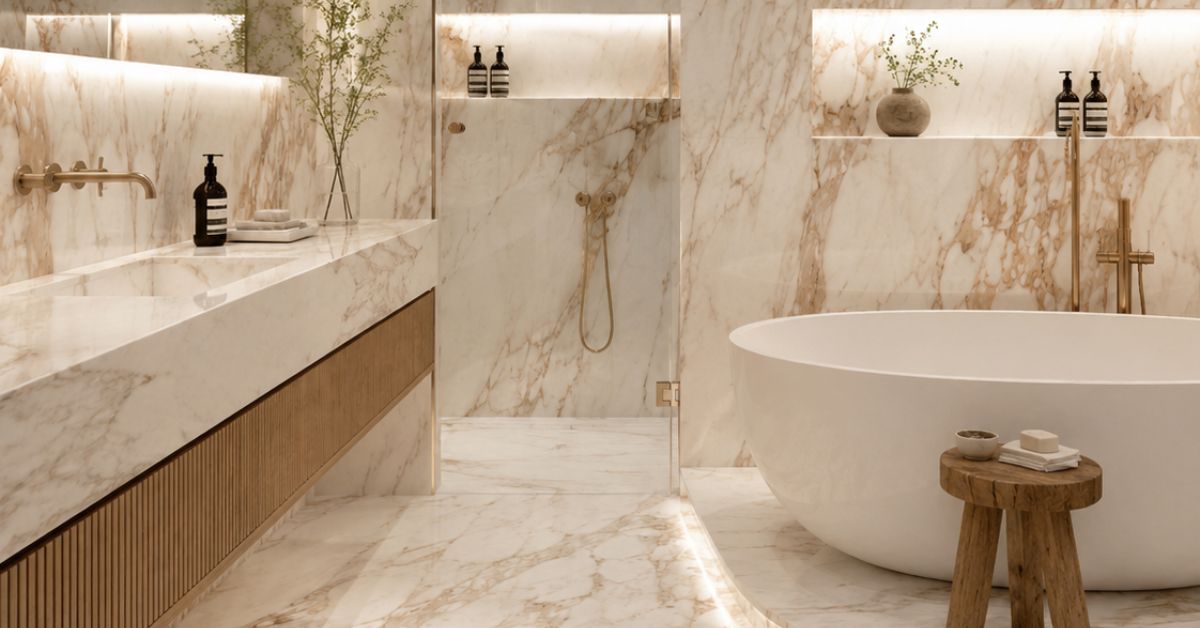
Bathroom
Bathroom: A Statuario marble bathroom — walls, floor, and even the vanity top in the same stone — creates that seamless, spa-like look that's everywhere on Instagram right now. Bathroom images featuring Statuario are consistently the most saved in interior design communities.
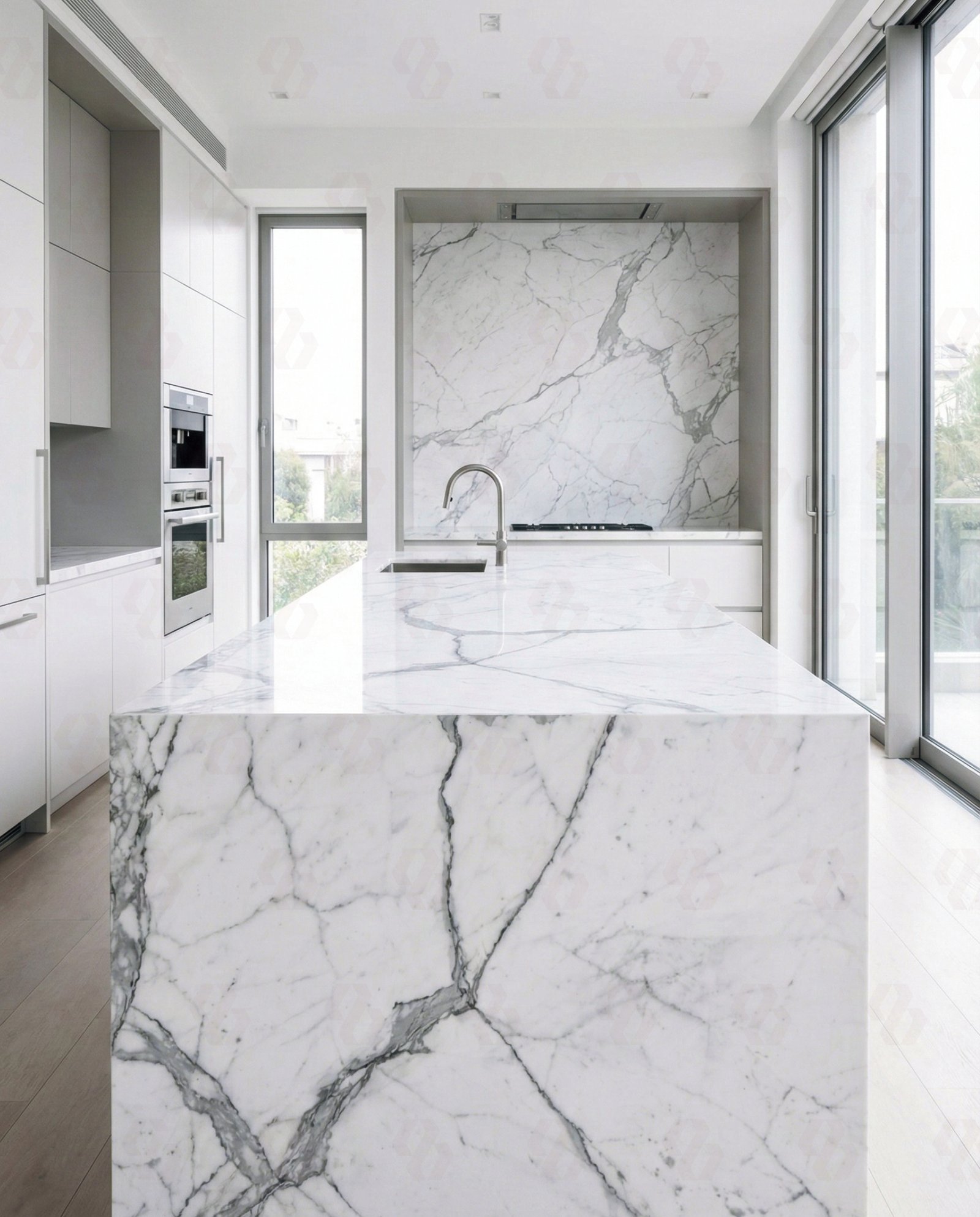
Countertop
Countertop: Kitchen and bathroom Statuario marble countertops are stunning but require sealing because marble is porous and can stain. If you're using it in a kitchen, be prepared for maintenance.
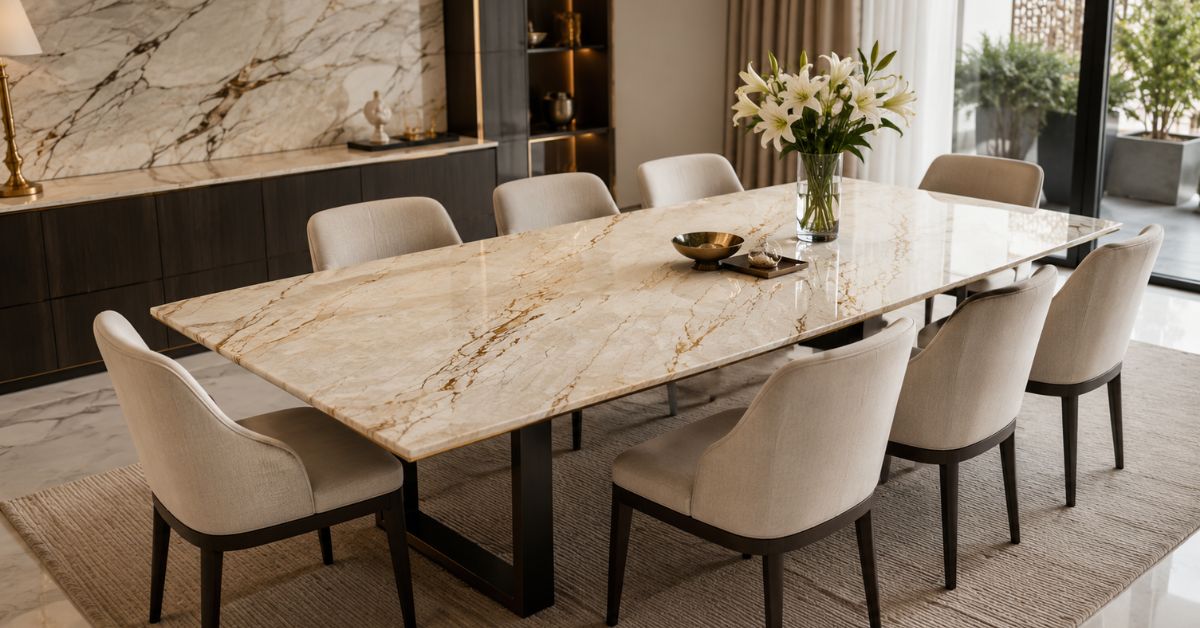
Dining Table
Dining Table: A white Statuario marble dining table has become a status piece in Indian homes. The contrast of the white stone against dark wood or metal legs is a timeless combination.
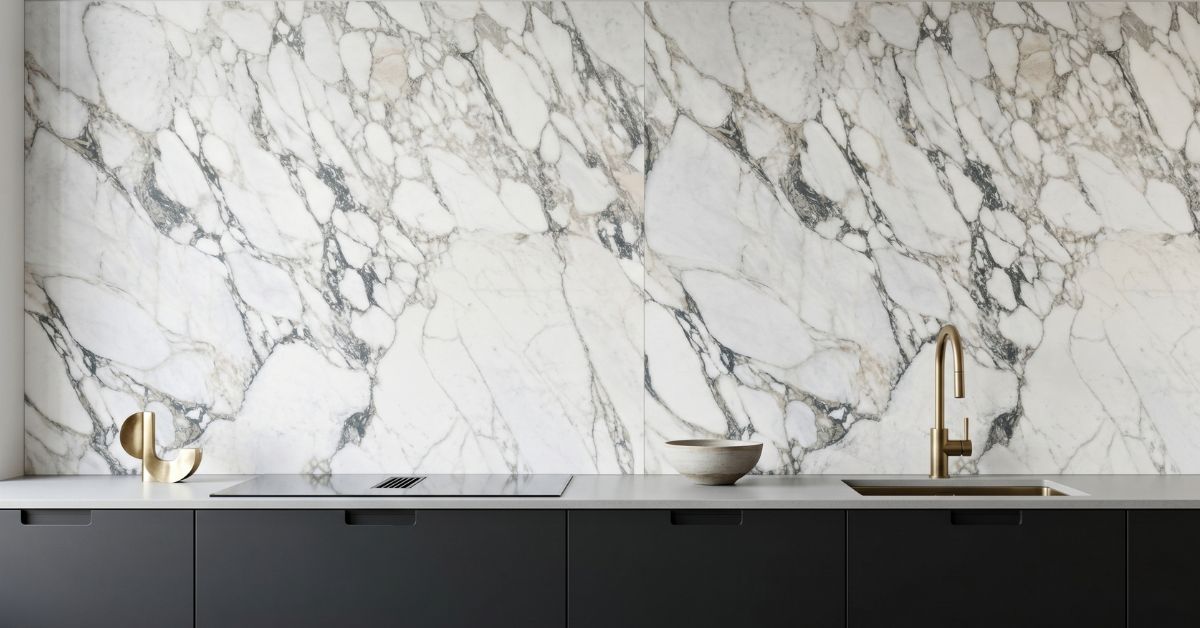
Backsplash
Backsplash: Statuario marble backsplash in a kitchen or bathroom adds elegance without requiring a huge amount of material.
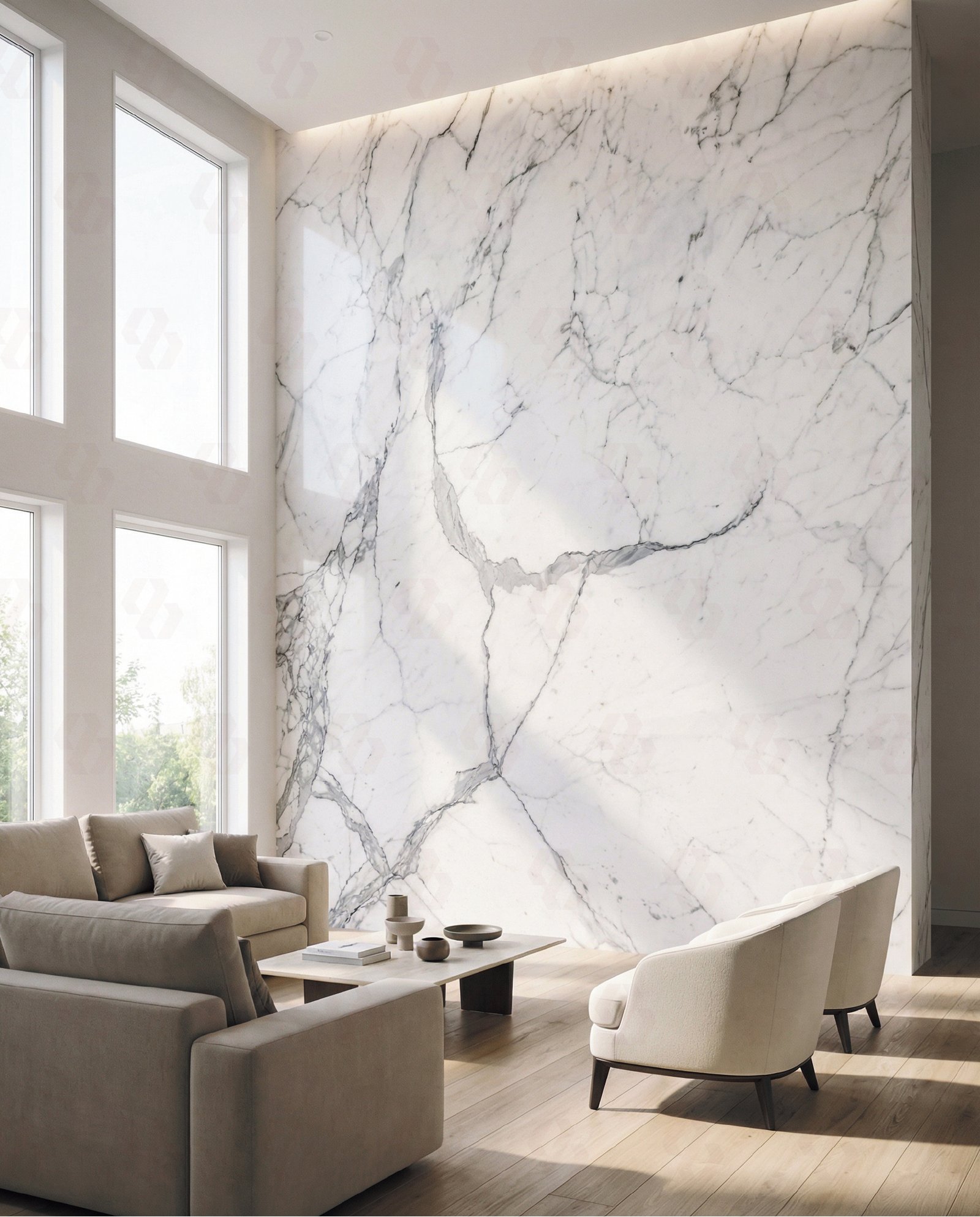
Cladding
Cladding: On exterior or interior walls, Statuario marble cladding creates a clean, sophisticated look. It's often used in building facades and feature walls in commercial spaces.
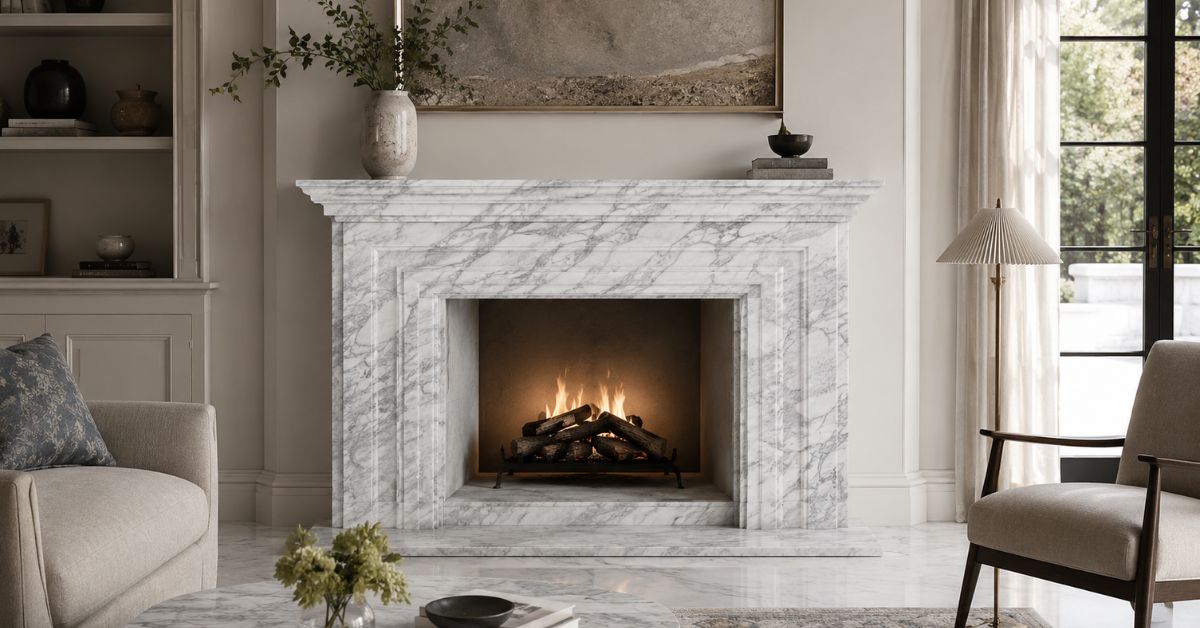
Fireplace
Fireplace: A Statuario marble fireplace surround is a classic European application that's gaining popularity in premium Indian bungalows.
Bookmatch
Bookmatch: Bookmatch Statuario marble is when two mirror-image slabs are placed side by side, creating a symmetrical vein pattern. It's a high-end technique used for feature walls and headboards.
Statuario vs Carrara vs Calacatta — What’s the Difference?
This confuses a lot of buyers. All three come from Carrara, Italy, but they're not the same stone.
Carrara has a grey-white base with subtle, feathery grey veining. It's the most common and most affordable of the three.
Statuario has a whiter, brighter base with bolder, more dramatic veining. It's rarer and more expensive than Carrara.
Calacatta has an even whiter base with thick, sweeping gold or grey veins. It's the rarest and most expensive — often 2–3x the price of Statuario.
The difference between Carrara and Statuario marble comes down to whiteness and vein drama. Statuario wins on both. Calacatta vs Statuario marble is more of a lifestyle choice — Calacatta is more statement-making, while Statuario is slightly more restrained and versatile.
Quick buyer logic: Choose Carrara for soft elegance, Statuario for premium white marble drama, and Calacatta for a louder luxury statement.
Italian vs Indian Statuario Marble — How to Tell the Difference
Imported Italian Statuario marble from Italy has sharper vein definition, a more consistent white background, and a denser, harder structure. It polishes to a deeper gloss and lasts longer under heavy foot traffic.
Indian Statuario marble is softer, may have more natural variation (which can be good or bad depending on your preference), and is much more affordable. The best Indian versions, especially those processed in Kishangarh, are excellent for mid-range residential projects.
A simple test: run your finger across the polished surface. Italian marble feels colder and smoother. Also check the back of the slab — Italian stone will typically have a mesh backing and come with documentation of origin.
Don’t buy only from photos. Compare full slabs in person because base whiteness, vein sharpness, polish, thickness and lot variation can change the final result completely.
Kajaria Statuario Tiles & Simpolo Statuario Alternatives
Kajaria Statuario tiles and Simpolo Statuario tiles are popular choices if you want the Statuario look without the natural marble budget — these are ceramic/vitrified tiles printed to mimic the stone's texture.
Natural Statuario marble is still different from printed vitrified tiles because every slab has real depth, variation, polish, and natural veining.
Buyer note: Tiles can copy the look, but they cannot copy the natural slab movement, depth, and uniqueness of real Statuario marble.
Frequently Asked Questions About Statuario Marble
Is Statuario marble expensive?
Yes, particularly the Italian variety. Indian Statuario marble is much more accessible. For most residential projects, Indian Statuario gives good value.
What is Statuario marble called in Hindi or Indian markets?
It's commonly called "Satvario" or "Statuario" in Indian marble markets. In Kishangarh and other trading hubs, dealers often use these interchangeably.
What is the country of origin of Statuario marble?
Original Statuario marble comes from Italy — specifically the Carrara quarries in Tuscany. Indian Statuario is a different stone quarried in India.
How much does Statuario marble cost in India?
Italian: ₹700–₹3,500+ per sq ft. Indian: ₹150–₹400 per sq ft. Prices vary by grade, finish, and supplier.
What is Statuario marble density?
Statuario marble density is approximately 2.6–2.7 g/cm³, similar to most natural marbles.
What are good alternatives to Statuario marble?
Kajaria Statuario tiles, Simpolo Statuario tiles, Nexion Statuario, and various vitrified tile options offer similar aesthetics at lower price points. Artificial Statuario marble (engineered quartz or porcelain) is also available for high-traffic areas where natural marble may not be practical.
Read our detailed Statuario marble buying guide to understand origin, stone quality, vein movement, and buyer mistakes before final selection.
Looking for Statuario Marble in Kishangarh?
Visit Bhutra Marble to explore Italian Statuario marble slabs, Indian Statuario alternatives, white marble collections, and premium imported marble options for flooring, bathrooms, countertops, and luxury interiors.