


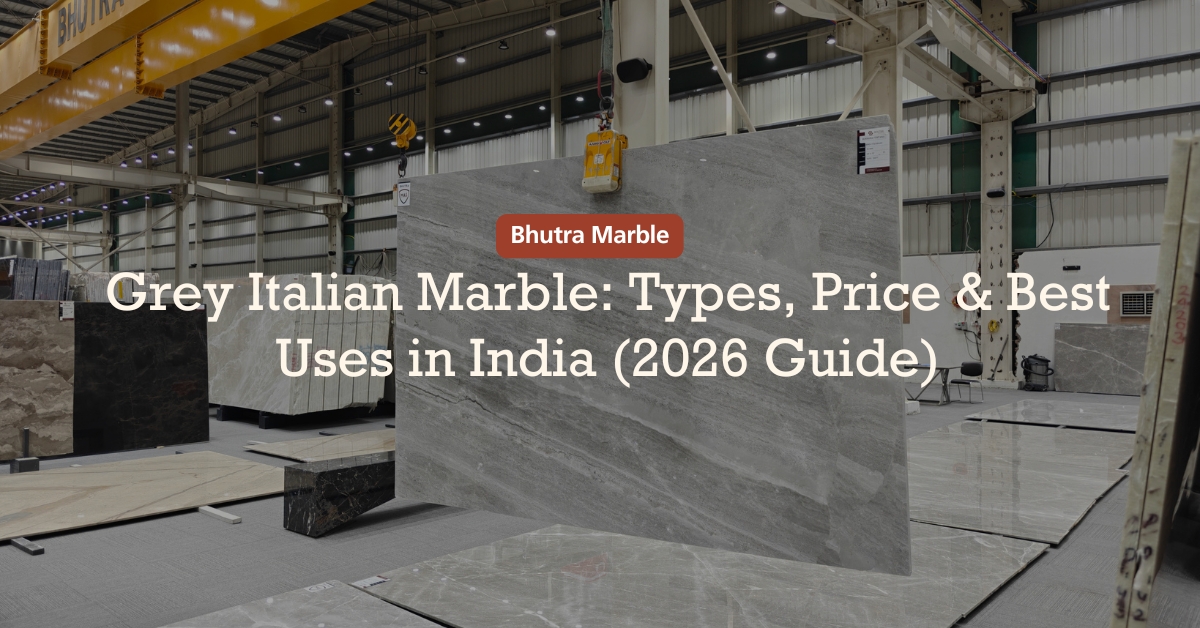
Grey Italian Marble
Quick answer: Grey Italian marble is natural marble quarried in Italy with a grey base tone instead of white or beige, ranging from light silvery grey to deep charcoal. It is one of the three most in-demand Italian marble colour categories in India, alongside white and beige. Popular varieties include Pietra Grey, Bardiglio, Carrara Grey, Calacatta Grey, and Tundra Grey. Price in India typically starts around ₹250 per sq ft, varying by variety, slab grade, thickness, and finish. It is commonly used for flooring, feature walls, vanities, and staircases, and is a durable, easy-to-maintain choice for modern and minimalist interiors when properly sealed.
If you’ve spent any time researching Italian marble for your home, you’ve probably noticed a shift. A few years ago, almost every conversation with a designer started and ended with white marble — Statuario, Calacatta, that sort of thing. Today, a lot of those same conversations start with one word: grey.
Grey Italian marble has quietly become one of the three most-searched marble colour categories in India, right alongside white and beige. And it’s not hard to see why. It photographs beautifully, it works with almost any interior style, and it doesn’t demand the kind of “handle with care” attention that a stark white slab does. If you’re trying to figure out whether grey Italian marble is right for your project — and which variety actually makes sense — this guide walks through all of it.
What Is Grey Italian Marble?
Grey Italian marble is simply Italian marble with a grey base tone instead of white, beige, or gold. It’s still quarried and processed the same way as any other Italian marble — the colour comes from natural mineral content in the stone, which is why you’ll see everything from a very light, almost silvery grey to a deep charcoal grey within the category.
What makes this category interesting is how much variation exists under one umbrella. Some grey marbles lean cool and steel-toned. Others lean warm, almost brownish-grey, closer to what people now call “greige.” Both are technically grey Italian marble, but they create very different moods in a room — which is exactly why picking the right variety matters more than just picking “grey.”
Grey vs White vs Beige Italian Marble — Which One Should You Choose?
This is probably the most common question buyers land on this page with, so let’s address it directly.
White Italian marble (Statuario, Calacatta, Carrara) is still the go-to for buyers who want a bright, luxurious, statement look. It works best in well-lit spaces and pairs naturally with gold or brass fixtures.
Beige Italian marble brings warmth. It’s forgiving of dust and daily wear compared to white, and it suits homes that lean traditional or warm-toned rather than stark and modern.
Grey Italian marble sits in between, in a good way. It’s calmer than white, more contemporary than beige, and it hides everyday marks better than a pure white surface would. If your interior is minimalist, modern, or you simply want something that won’t look dated in five years, grey is usually the safer long-term choice. A lot of architects specifically recommend it for spaces meant to look clean and uncluttered — living rooms, lobbies, open kitchens.
There’s also a genuine trend worth knowing about here: cooler, steel-toned greys were the dominant preference for a while, but 2026 design trends are clearly moving toward warmer, earthier greys — sometimes called greige — over pure cool grey. If you’re choosing between varieties, it’s worth keeping that shift in mind.
Popular Grey Italian Marble Varieties (And What Each Looks Like)
One thing that confuses a lot of first-time buyers is how many different names show up under “grey Italian marble.” Some are genuine Italian quarry varieties. Others are trade names that dealers and importers use to market a slab — closer to a nickname than an official classification. Knowing the difference helps you ask the right questions before you buy.
Genuine Italian grey marble varieties:
- Pietra Grey — Probably the most recognisable name in this category. It has a deep, structured grey base with fine white veining running through it, giving it a fairly architectural, almost engineered look despite being completely natural. Popular for flooring and feature walls.
- Bardiglio — A classic Italian grey marble with a softer, more traditional grey tone and subtle veining. It reads warmer than Pietra Grey and works well in interiors that want a grey base without looking too stark or modern.
- Carrara Grey — A lighter, more understated grey with the fine, feathery veining Carrara marble is known for. Good for buyers who want the “grey feel” without a heavy, dark presence in the room.
- Calacatta Grey — Carries the bolder, more dramatic veining Calacatta is famous for, just set against a grey rather than pure white background. A strong choice for a statement wall.
- Tundra Grey — A warmer, more textured grey that leans into the greige trend — a good pick if you want grey without it feeling cold.
Common trade/market names you'll come across:
Walk into any marble market in India, and you’ll hear grey slabs marketed under names like Armani Grey, Burberry Grey, Versace Grey, Bulgari Grey, Dior Grey, Hermes Grey, Milano Grey, Miami Grey, Alaska Grey, Amalfi Grey, Athens Grey, Silver Grey, Smokey Grey, Steel Grey, Silk Grey, Sonata Grey, Spider Grey, Oracle Grey, Olive Grey, Charcoal Grey, and quite a few more. Worth knowing: these are commercial names given by dealers and importers to describe a slab’s look and appeal — they aren’t official Italian quarry classifications, and they carry no connection to the fashion brands they’re named after. Two suppliers can sell visually different slabs under the exact same trade name.
This isn’t a red flag — it’s just how the marble trade works, especially for grey and beige categories where variation between lots is common. The practical takeaway is simple: don’t buy on the name alone. Ask what the actual quarry or origin is, and always inspect the physical slab (or at least clear photos of the specific lot) before finalising, rather than assuming one “Armani Grey” slab will look identical to another you saw elsewhere.
Grey Italian Marble Price in India
This is usually the second question, right after “which variety should I pick.”
Grey Italian marble in India typically starts around ₹250 per sq ft for standard varieties and moves upward depending on the specific stone, slab grade, thickness, and finish. Here’s a rough sense of how pricing breaks down by application:
| Application | Typical Price Range (per sq ft) |
|---|---|
| Flooring | ₹220 – ₹450 |
| Wall cladding / feature walls | ₹250 – ₹500 |
| Countertops & vanities | ₹220 – ₹450 |
| Premium/rare varieties | ₹500 – ₹1,000+ |
A few things that move the price up or down:
- Variety — A well-known name like Pietra Grey generally costs more than a lesser-known grey lot.
- Slab grade — Higher-grade slabs with more consistent veining and fewer natural fissures cost more.
- Thickness and finish — Polished finishes tend to sit at a similar price to honed, but leathered or textured finishes can add to the cost due to extra processing.
- Slab size — Large-format slabs that reduce joints on a floor typically command a premium.
These are directional figures. Marble pricing in India varies quite a bit by supplier, region, and current import rates, so it’s always worth confirming the exact number for the specific lot you’re considering rather than budgeting off a general range.
Best Uses for Grey Italian Marble

Grey Italian marble is genuinely one of the more versatile stones to work with, which is part of why demand for it has grown. Here’s where it tends to work best:
Flooring — This is the single most common use. Grey works particularly well in living rooms, lobbies, and open-plan layouts where you want a neutral base that doesn’t compete with furniture or wall colours. Lighter greys make a room feel more open; darker greys ground a space and hide daily foot traffic marks better than white does.
Feature walls — A grey marble wall with visible natural veining makes a strong but understated focal point, especially behind a bed, in a living room, or as a backdrop for a staircase.
Vanities and countertops — Grey pairs naturally with almost any cabinet colour, which makes it a low-risk, high-impact choice for kitchen counters and bathroom vanities.
Staircases — Durable enough for daily use, and the neutral tone works whether the surrounding space is modern or more traditional.
Commercial spaces — Hotels, offices, and showrooms often lean toward grey specifically because it photographs well, ages gracefully, and doesn’t show wear as visibly as lighter stones in high-footfall areas.
Is Italian Marble Durable? (And Is Grey Any Different?)
This comes up a lot, so it’s worth answering directly: Italian marble, including grey varieties, is a natural stone that’s durable enough for both residential and commercial use, but it is more porous than materials like quartz. That means it can stain if liquids are left sitting on it, and it can etch if it comes into contact with something acidic like lemon juice or vinegar.
Grey marble doesn’t behave differently from white or beige in this respect — durability comes down to sealing and maintenance, not colour. If anything, darker greys tend to show water spots and dust less obviously than pure white surfaces do, which is one reason people find grey easier to live with day-to-day.
How to Identify Genuine Italian Marble
A few basics that hold true for any Italian marble, grey included:
- Ask for the quarry name, not just a trade name. A dealer who can tell you the actual origin is generally more transparent about what you’re buying.
- Check the vein pattern closely. Natural marble veining is irregular and doesn’t repeat in an obvious pattern across a slab. If the same pattern seems to repeat identically, it may not be natural stone.
- Feel the surface temperature. Marble stays noticeably cooler to the touch than most engineered alternatives, even in a warm room.
- Compare weight. Natural marble is denser and heavier than most look-alike materials of the same size.
- See the actual slab before buying, especially for large flooring areas, since colour and veining vary lot to lot even within the same named variety.
Caring for Grey Italian Marble
- Use a pH-neutral stone cleaner — avoid vinegar, lemon-based cleaners, or anything acidic.
- Wipe up spills, especially oil, wine, or coloured liquids, as soon as possible.
- Get the surface sealed periodically (roughly once a year for most homes, though high-traffic areas may need it sooner).
- Use coasters and trivets on countertops and vanities to prevent etching from acidic contact.
- Avoid dragging heavy or rough-bottomed objects across the surface to prevent scratching.
With reasonable care, grey Italian marble holds up well for decades — a lot of the “marble is high-maintenance” concern comes from skipping sealing rather than any real fragility in the stone itself.
Why Buy Grey Italian Marble from Bhutra Marble
Kishangarh remains India’s largest hub for imported Italian marble, and that matters most when you’re buying a natural stone where every slab looks a little different. At Bhutra Marble, you can compare actual grey Italian marble slabs in person — Pietra Grey, Bardiglio, Tundra Grey, and other varieties — rather than relying on catalogue photos that rarely capture the real veining and tone accurately. Our team can also help match slabs across a large flooring area, which is one of the trickier parts of working with a natural stone at scale, and we offer pan-India crated and insured delivery once you’ve finalised your selection.
FAQ :-
It's Italian marble with a grey base tone rather than white or beige, coming in shades that range from light silvery grey to deep charcoal, depending on the variety.
It typically starts around ₹250 per sq ft, with the final price depending on the specific variety, slab grade, thickness, and finish selected.
Pietra Grey is one of the most widely recognised and used grey Italian marble varieties, known for its structured grey base and fine white veining.
Yes, it's one of the most common applications — grey works especially well in living rooms and open-plan spaces where a neutral, non-distracting base is preferred.
Yes, with proper sealing and maintenance, Italian marble — including grey varieties — holds up well for decades in both residential and commercial use. It is more porous than engineered stone, so it does need periodic sealing.
"Marble" is a broad category of natural stone found worldwide, while Italian marble specifically refers to marble quarried in Italy, generally known for its refined veining, brighter tones, and premium finish compared to marble from other regions.
Italy's most famous marble quarries are located in and around Carrara in Tuscany, along with other regions known for specific varieties and colour tones.
Lighter greys make a space feel more open and work well in smaller or less-lit rooms, while darker greys add depth and hide daily wear more effectively — a good fit for high-traffic areas or larger, well-lit spaces.
Visiting the Bhutra Marble showroom in Kishangarh lets you inspect real slabs in person, which is especially useful for large flooring projects where colour consistency across the area matters.
Looking to explore grey Italian marble for your project? View our Grey Italian Marble collection → or visit our Kishangarh showroom to compare real slabs in person.
Bhutra Marble is a Kishangarh-based importer of premium Italian and exotic marble, stocking 600+ varieties including Statuario, Calacatta, Carrara, and Botticino, with PAN-India supply. For variety selection, slab viewing, and guidance on matching the right stone to each room, contact our team.