




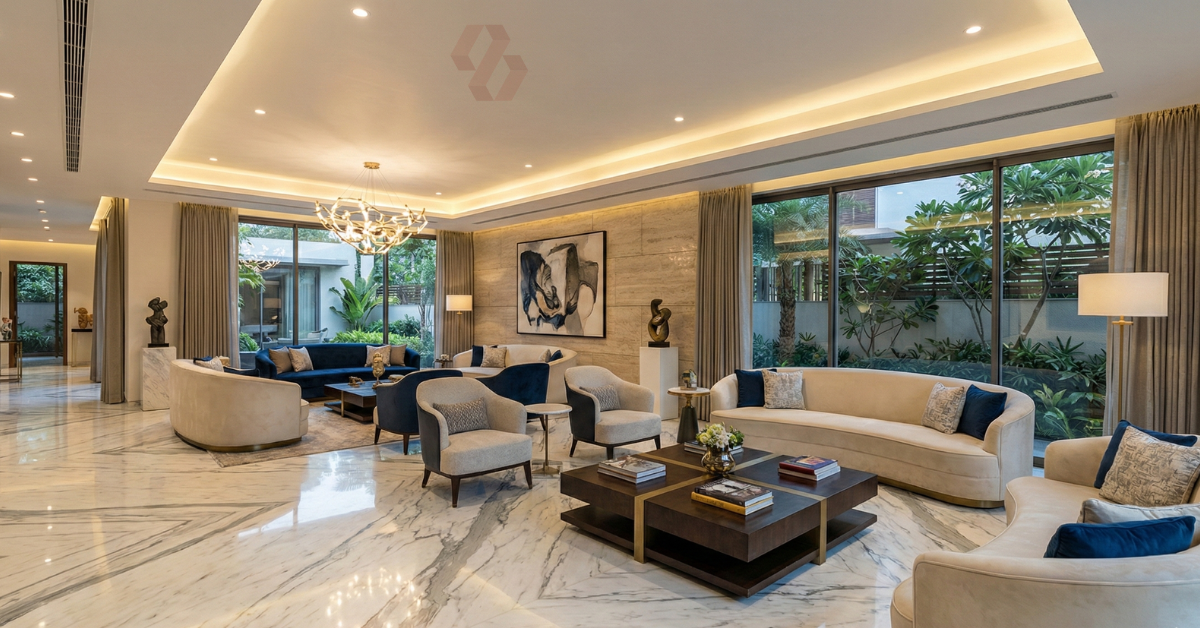
Quick Answer: How Do Interior Designers Use Marble?
Interior designers use marble in two distinct roles. As a background material, it provides quiet, continuous surfaces—foyer floors, neutral bathroom walls, understated countertops. As a focal point, it draws the eye through dramatic veining—a bookmatched living-room wall, a waterfall island, a statement basin counter.
The common applications are flooring, wall cladding and feature walls, kitchen islands and countertops, bathroom walls and vanities, staircases, fireplace surrounds, and tabletops. Designers match the slab’s colour, vein scale and finish to each room’s size, lighting and use, then plan the cutting layout before fabrication begins.
How Do Interior Designers Use Marble?
How do interior designers use marble? They use it as both a working surface and a design statement—on floors, feature walls, kitchen islands, bathroom vanities, staircases and furniture. But the visible application is only half the decision. The real work happens earlier: choosing a slab whose veining, tone and finish suit the room, planning the layout before a single cut is made, and matching the stone to the way the space is lit and lived in.
This guide walks through where designers place marble and, more usefully, why they choose it there, how they select the right slab, and what practical limitations they plan around. You will find twelve applications, finish guidance, comparison tables, a selection checklist and honest answers to the questions that decide whether a marble interior succeeds.
Why Interior Designers Use Marble
No two marble slabs are identical. Because the stone forms through natural mineral movement, each block carries its own veining, tone and character. Designers value this variation because it delivers something a printed tile or engineered surface cannot: a surface that reads as genuine rather than repeated.
Marble also has visual depth. Light travels a short distance into the polished surface before reflecting, which gives good marble a sense of glow rather than a flat colour. That quality changes with the finish and the lighting, which is why finish selection is a design decision, not an afterthought.
Large-format slabs let designers create continuous surfaces with fewer joints. A single jumbo slab can run across a wide floor or climb a double-height wall, so the veining flows without interruption. This is a large part of marble’s appeal for open-plan interiors.
The stone adapts across styles. The same material family suits a minimal white bathroom, a warm modern living room and a dramatic hotel-style lobby—the difference lies in which slab is chosen and how it is finished.
There is also long-term design value. A well-selected, well-installed marble surface tends to age into a space rather than date it. That said, marble is not the right answer for every surface. A busy family kitchen worktop, a splash-heavy utility area or a high-slip wet floor may be better served by a different material or a more forgiving finish. The skill lies in knowing when marble is the star and when it should stay in the background—and when another stone entirely is the smarter call.
12 Ways Interior Designers Use Marble

Below are the twelve applications designers reach for most often. For each, you will find why marble suits the location, the visual character that works, finish considerations, practical limits, one design tip and one common mistake.
1. Entrance Foyers and Formal Living-Room Flooring
The foyer sets the tone for a home, so designers often use marble here even when the rest of the floor is something else. A calm, large-format floor in a soft white-grey or warm beige reads as considered and open.
Character that works: subtle, linear veining that does not fight with furniture. Finish: polished for reflectivity in well-lit foyers; honed where glare or slip is a concern. Limitation: a busy pattern in a small foyer can feel restless. Design tip: run the vein direction along the main sightline as you enter, so the floor visually leads you in. Common mistake: choosing a heavily patterned slab for a compact entrance—scale it down.
2. Large-Format Flooring in Villas and Luxury Homes
Open villa floors reward large slabs because fewer joints mean a cleaner, more continuous plane. Designers plan the module and joint grid against the room’s proportions so the layout feels deliberate.
Character that works: consistent background tone across the lot, with restrained movement. Finish: polished for formal areas; honed or lappato in circulation zones. Limitation: lot consistency matters more here than anywhere—one off-tone slab in a wide floor is obvious. Design tip: reserve the best-matched slabs for the central, most-viewed area. Common mistake: ordering by name alone without confirming the actual lot; for a floor this size, review the best marble options for flooring before committing.
3. Bookmatched Feature Walls
A bookmatched wall is where marble becomes art. Two adjacent slabs are opened like a book so the veining mirrors along a centre line, creating a symmetrical, wing-like pattern. This is the single most dramatic thing you can do with stone.
Character that works: bold, directional veining with clear movement—the more expressive the slab, the stronger the mirror. Finish: polished to maximise depth, or honed for a softer read. Limitation: bookmatching needs sequential slabs from the same block, so availability and quantity must be confirmed early. Design tip: plan the centre joint at the visual centre of the wall, not wherever the wall happens to end. Common mistake: deciding to bookmatch after the slabs are cut—see the collection of marble for wall cladding and feature walls and plan the layout first.
4. TV-Unit and Double-Height Wall Cladding
Behind a television or across a double-height living wall, marble cladding gives a solid, architectural backdrop. Because these walls are viewed from a distance, larger vein patterns hold up well.
Character that works: medium-to-bold veining that stays legible from across the room. Finish: honed often suits TV walls because it cuts screen glare; polished suits taller feature walls with controlled lighting. Limitation: on tall walls, joint alignment across slabs must be planned—misaligned veins are unforgiving at height. Design tip: mock up the slab positions on an elevation drawing before cutting. Common mistake: ignoring where the TV mount and cable points land relative to the veining.
5. Kitchen Islands and Waterfall Edges
An island is a natural focal point, and a waterfall edge—where the top surface folds down the sides to the floor—lets the veining continue over the corner. Done well, the pattern appears to pour over the edge.
Character that works: a slab with movement that can be matched around the mitred corner. Finish: honed is often the pragmatic choice on a working island because it hides minor surface marks better; polished shows more depth but also shows etching more clearly. Limitation: the waterfall mitre needs a slab large enough to keep the vein continuous. Design tip: dry-lay the top and leg pieces together before the mitre is cut. Common mistake: treating the island as decorative and forgetting it is also a hard-working surface—browse marble for kitchens and countertops with daily use in mind.
6. Kitchen Countertops and Backsplashes
Marble countertops divide opinion, and honestly so. They are beautiful and they patinate with use. Designers who specify marble here set expectations with the client first, because marble in a kitchen is a different choice, not a low-maintenance one.
Character that works: softer, mid-tone marbles disguise everyday wear better than bright white with sharp contrast. Finish: honed is generally recommended for kitchen tops—etch marks and minor scratches show far less on a matte surface than on a high gloss. Limitation: acids etch marble regardless of sealing; hot cookware should never sit directly on the surface. Design tip: run the backsplash from the same slab so the counter and splash read as one. Common mistake: assuming a sealer makes the top stain-proof and etch-proof—it does neither, as covered in the limitations section.
7. Bathroom Walls and Shower Cladding
Bathrooms are where marble often looks its best, because the walls take light without the heavy wear a kitchen sees. Full-height cladding in a calm marble turns an ordinary bathroom into a considered one.
Character that works: soft, watery veining that suits a restful space. Finish: polished walls read richly under bathroom lighting; shower floors are safer honed or textured. Limitation: marble is porous, and hard-water residue and coloured products need prompt cleaning. Design tip: carry one slab’s pattern from the vanity wall into the shim of the niche for continuity. Common mistake: using a high-gloss polished finish on the wet shower floor where slip resistance matters more than shine.
8. Bathroom Vanities and Basin Counters
A vanity top is a small canvas, which makes it a good place to use an expressive offcut that would be too much across a whole floor. A single striking slab here becomes jewellery for the room.
Character that works: a bold, characterful piece—this is where dramatic marbles earn their place. Finish: honed resists the etching from cosmetics, toothpaste and cleaning products that vanity tops constantly meet. Limitation: perfume, nail products and acidic cleaners will etch a polished vanity quickly. Design tip: pair a bold vanity top with quieter wall tile so they do not compete. Common mistake: choosing high polish on a vanity, then being surprised by dull rings from bottles and cosmetics.
9. Staircases, Risers and Lift Lobbies
Staircases and lobbies are high-traffic, high-visibility surfaces, so marble here is both practical wear surface and first impression. Continuous marble treads give a solid, crafted feel underfoot.
Character that works: a consistent background with modest veining so the steps read as a set. Finish: honed or textured on treads for grip; polished risers are fine because you do not walk on them. Limitation: polished stair treads can be slippery, especially in socks or when wet. Design tip: use a subtle anti-slip groove or a honed nosing on each tread edge. Common mistake: specifying a fully polished staircase for the look, then retro-fitting anti-slip strips that spoil it.
10. Fireplace Surrounds
A fireplace surround is a classic marble application and a forgiving one, because it is admired more than it is touched. Designers use it to anchor a living room with a single well-chosen piece.
Character that works: anything from a restrained white to a dramatic dark marble, depending on the room. Finish: polished for a crisp, formal surround; honed for a softer, contemporary look. Limitation: marble is heat resistant but not heat-proof, so a modern insert should be installed with the correct clearances and a suitable hearth. Design tip: let the surround pattern be bolder than the flooring so it stands apart. Common mistake: treating the surround as an afterthought and matching it too closely to the floor, so it disappears.
11. Dining Tables, Coffee Tables and Console Furniture
Marble furniture lets designers introduce stone without committing a whole surface to it. A marble tabletop or console brings the material into a room that has timber or tiled floors.
Character that works: a compact, well-figured piece—furniture-sized surfaces show a single slab’s character clearly. Finish: honed dining tops handle food, wine and citrus with less visible etching; polished coffee tables suit lower-contact display use. Limitation: a dining top meets acidic food and drink daily, so finish and client expectations both matter. Design tip: specify a slightly thicker or built-up edge on tables so the stone reads as solid. Common mistake: using a high-polish marble dining top in a household that entertains constantly, then being frustrated by etch rings.
12. Mandirs, Reception Desks and Decorative Accents
Marble carries meaning in Indian homes, and the mandir is where that shows most. A calm white or cream marble suits a pooja space, while a reception desk in a bold slab makes a commercial first impression. Small accents—inlays, thresholds, shelf tops—let marble appear in measured doses.
Character that works: serene, light tones for a mandir; expressive slabs for reception statements. Finish: polished for a bright, clean pooja space; either finish for accents. Limitation: if a client wants a backlit panel, remember that a genuine glow comes from translucent onyx or specialised thin-stone systems—ordinary opaque marble does not transmit light and should not be sold as backlit. Design tip: keep mandir marble simple so the space stays devotional rather than busy. Common mistake: confusing marble with onyx for backlit features—these are different materials with different behaviour.
How Interior Designers Select the Right Marble Slab

Selection is where projects are won or lost. The commercial name on a slab—Carrara, Statuario, a beige, a green—tells you the broad family, but the specific slab determines how the finished surface looks. Two slabs sold under the same name can differ in background tone, vein density and quality. The exact block matters more than the label.
Designers weigh application and traffic first. A quiet foyer, a working kitchen and a wet shower floor call for different tones and finishes even within the same marble family. Room size sets the vein scale: bold patterns overwhelm small rooms and get lost in very large ones.
Lighting is decisive. Natural light shifts a slab’s colour through the day, and warm artificial light will pull a cool grey marble warmer than it looked in the yard. Background tone is judged against the room’s paint, joinery and daylight—not in isolation.
Then come the physical checks: slab dimensions and the usable area after edges and repairs are removed, thickness for the application, finish, and lot consistency across the full quantity. Designers also separate normal character—natural veins and minor fissures—from genuine structural concerns like weak zones, excessive resin repairs or cracks that run through the body.
Bookmatching suitability, cutting and wastage planning, and realistic maintenance expectations round out the decision, along with the total quantity needed so the whole job comes from one consistent lot. For a fuller walkthrough, see how to choose the right marble slab.
Budget belongs in this conversation too. Price varies with the variety, slab size, thickness, finish and availability, so it is worth understanding the Italian marble price guide factors before narrowing choices—rather than selecting on headline rate alone.
How Designers Plan Marble Veining and Bookmatching
Veining planning is technical work, and it happens before cutting. The goal is that the finished surface looks intentional—veins flowing where you want them, joints landing where they should, and matched slabs actually matching.
It starts with sequential slab selection. Bookmatching and vein continuity only work if slabs are taken in order from the same block, because that is how the pattern stays related from one panel to the next. Designers reserve the sequence early, before the block is split for other orders.
Layouts are then planned on paper. An open-book (mirror) layout reflects two slabs about a centre joint; a running match carries the vein straight across joints. Either way, the centre joint is positioned at the visual centre of the wall or floor, and elevation drawings show exactly where each numbered slab sits.
Dry layouts confirm the plan physically. Slabs are laid out in sequence on the yard floor, numbered, and photographed so the fabricator cuts to the approved arrangement rather than improvising.
The cutting plan then accounts for real-world details: electrical points, switch plates, tap holes and furniture positions are marked so a vein does not run straight into a socket. Joint alignment across adjacent panels is checked, and lighting is considered because grazing light exaggerates any misalignment.
Wastage is planned honestly. Matching and mitring generate offcuts, so the order includes enough material for the layout plus spares. Involving the fabricator and installer before cutting is not optional—they flag what is buildable and what is not while changes are still cheap.
Planning a bookmatched wall or a large marble floor? Share your elevation drawings, room dimensions and preferred palette with Bhutra Marble, and reserve a sequenced lot before the block is split.
Polished vs Honed Marble in Interior Design

Finish is not a matter of one being better—it is about matching the finish to the application. Polished maximises depth and reflectivity; honed offers a calmer, more forgiving surface. Here is how they compare.
| Consideration | Polished | Honed |
|---|---|---|
| Surface appearance | Glossy, reflective | Matte, satin |
| Reflection | High—bounces light | Low—absorbs light |
| Colour depth | Deeper, richer read | Softer, lighter read |
| Slip (wet areas) | More slippery when wet | Generally more grip |
| Scratch visibility | Shows fine scratches more | Hides fine scratches better |
| Etching visibility | Etch marks stand out sharply | Etch marks blend in more |
| Cleaning | Wipes clean, shows smears | Forgiving, can hold dust in pores |
| Common applications | Feature walls, formal floors, risers | Kitchen tops, vanities, treads, wet floors |
| Important limitation | Neither finish resists acid etching; honed only makes it less visible | Honed does not stop etching or staining—it disguises marks |
The key point: honed marble makes etching and minor marks less obvious, but it does not prevent the chemical etching itself. That distinction guides most finish decisions in kitchens and bathrooms.
Matching Marble With Other Interior Materials
Marble rarely works alone. Designers pair it with other materials to balance its coolness and hardness, and the pairing sets the mood of the room.
Warm wood (oak, teak) softens white and grey marble and adds warmth to cool interiors. Dark wood (walnut, wenge) contrasts against pale marble for a richer, grounded look. Brass and brushed gold flatter warm and white marbles and read as classic; black metal frames marble crisply for a contemporary edge. Stainless steel suits kitchens and cooler, industrial-leaning schemes.
Glass keeps marble feeling light, useful in showers and partitions where you want the veining visible without visual weight. Upholstery and textiles in neutral or muted tones let a bold marble stay the hero. Textured plaster and neutral paint give a marble feature wall a quiet backdrop so the stone is not competing with the walls around it.
Marble can also pair with other natural stones—a marble floor with a quartzite island, or a marble wall above a travertine base—provided one stone leads and the other supports.
The governing rule is restraint. One strongly patterned marble per room is usually enough. Combining several bold stones, or a busy marble with busy wallpaper and patterned tile, produces visual noise rather than richness. Let the marble be loud and keep its neighbours quiet.
Best Marble Character for Different Interior Styles
Style guides the marble character, not the reverse. The table below maps common interior styles to the colour family, vein character and applications that tend to suit them. Treat it as a starting point, not a rulebook—the right slab always depends on the specific room.
| Style | Colour family | Vein character | Common applications | Pairs with | Avoid |
|---|---|---|---|---|---|
| Minimal modern | Bright white, cool grey | Fine, restrained | Floors, vanities | Black metal, glass | Busy, high-contrast veining |
| Contemporary | White-grey, greige | Linear, medium | Feature walls, islands | Oak, brushed steel | Overly ornate patterns |
| Warm modern | Cream, beige, warm white | Soft, watery | Floors, fireplace, tables | Teak, brass | Cold blue-grey tones |
| Classical | White with grey, warm beige | Elegant, flowing | Floors, staircases, surrounds | Walnut, brass | Harsh industrial pairings |
| Art Deco | Bold white-grey, green, dark | Dramatic, graphic | Feature walls, bars, bathrooms | Brass, black metal | Timid, washed-out slabs |
| Luxury hotel-inspired | Statement white or dark | Expressive, bookmatchable | Lobbies, feature walls, baths | Brushed gold, dark wood | Flat, characterless stone |
| Biophilic | Warm neutrals, soft green | Organic, gentle | Floors, vanities, accents | Wood, plants, linen | Stark black-and-white contrast |
| Dramatic statement | Deep green, dark, bold veined | Strong, directional | Feature walls, islands, powder rooms | Brass, dark timber | Multiple competing bold stones |
For softer, more controlled white-grey veining, Carrara marble is a familiar reference point, while bolder white with stronger grey movement points toward Statuario marble. Across schemes that call for a lighter palette, it helps to compare several imported white marble varieties side by side, since whites differ more than photographs suggest. For projects leaning on imported stone throughout, Italian marble for interior projects offers a broad range of characters—and once you know the look you want, you can explore Italian marble slabs by variety.
Important Practical Limitations of Marble
Good design planning includes marble’s limits. None of these make marble a poor choice—they make it a considered one.
Etching is the most misunderstood issue. Marble is a calcium-based stone, so acidic substances—lemon, vinegar, wine, many cleaners—react with the surface and leave a dull mark. According to the Natural Stone Institute, this reaction is inherent to calcium-carbonate stones, and it is a surface change, not a stain. Crucially, sealing does not prevent etching; only avoiding acid contact does.
Staining is a separate problem caused by absorption. Marble is porous, so oils and coloured liquids can soak in if left. Sealing slows this absorption and buys time to wipe a spill, but it does not make marble stain-proof.
Scratching happens because marble is softer than granite or quartzite. Grit underfoot and abrasive pads both mark the surface over time. Wet areas need attention because polished marble becomes slippery when wet—honed or textured finishes are safer for shower floors and pool surrounds.
In kitchens, expect a patina. Honed finishes disguise wear best, hot cookware should never sit directly on marble (it is heat resistant, not heat-proof), and pH-neutral cleaners are essential. Acidic and abrasive cleaners damage marble, so the Natural Stone Institute recommends mild, non-acidic products.
Finally, plan for professional installation and keep spare material from the same lot. Replacing a damaged panel years later with a mismatched slab is the avoidable disappointment. Suitability always depends on the specific slab, finish, application, installation and maintenance expectations together—not on the marble name alone.
Common Marble Interior Design Mistakes
Most marble disappointments trace back to a handful of avoidable errors. Here they are, each with the fix.
- Selecting from a small sample. A hand sample cannot show a full slab’s veining or tone. Fix: view the actual slabs before approving.
- Buying on the name alone. Two slabs with the same commercial name can differ. Fix: judge the specific slab, not the label.
- Ignoring the full lot. One off-tone slab spoils a large floor. Fix: confirm lot consistency across the whole quantity.
- Ignoring room lighting. Marble shifts under different light. Fix: assess the slab against the room’s natural and artificial light.
- Random vein direction. Unplanned veins look accidental. Fix: plan direction on an elevation drawing before cutting.
- Poor joint placement. Joints landing in odd spots read as careless. Fix: set the centre joint at the visual centre.
- Using too many competing stones. Several bold patterns fight. Fix: let one stone lead per room.
- Wrong finish for the application. High polish on a shower floor or busy kitchen top. Fix: match finish to use—honed for wet and working surfaces.
- Assuming sealer prevents etching. It does not. Fix: set the client’s expectations and avoid acid contact.
- Ordering too little material. Matching and cutting create waste. Fix: order enough for the layout plus spares from the same lot.
- Cutting before layout approval. Fabrication before sign-off is irreversible. Fix: approve the dry layout first.
- Choosing lowest price without checking usable area. A cheaper slab with heavy repairs yields less. Fix: compare usable slab area, not headline rate.
- Using harsh or acidic cleaners. These etch and dull marble. Fix: use pH-neutral stone cleaners only.
Marble Selection Checklist for Interior Designers and Homeowners
A quick list to save or share before you approve a marble order:
- Confirm the application and expected traffic for the surface
- Match vein scale to the room size
- View the slab under the room’s natural and artificial lighting
- Check the background tone against paint and joinery
- Choose the finish (polished vs honed) for the application
- Measure usable slab area after edges and repairs
- Confirm thickness suits the use
- Verify lot consistency across the full quantity
- Separate natural veins/fissures from structural concerns
- Inspect for excessive resin repairs or weak zones
- Confirm bookmatch suitability and sequential availability
- Plan cutting and wastage, including spares
- Mark electrical points, taps and furniture on the layout
- Agree maintenance expectations with the client
- Order the total quantity from one lot at once
Why Full-Slab Viewing Matters
Photographs and small samples flatten marble. They cannot show the real background tone, the scale of the veining, or how movement travels across a full slab. Inspecting the actual slabs is the only reliable way to judge what you are buying.
Full-slab viewing lets you assess the true background tone and vein movement, compare lot variation across the quantity you need, and spot repairs or weak zones before they are built into a wall. You can confirm slab size and thickness, see the polish quality in person, and judge whether two slabs will genuinely bookmatch. It is also the moment to confirm that enough consistent material is actually available for the whole job.
This is where a proper slab yard earns its place. Bhutra Marble’s Kishangarh showroom lets customers and design professionals compare full slabs across imported marble, Italian marble, quartzite and onyx collections, side by side and under real light—so decisions are made on the stone itself, not on a screen. For more on evaluating a source, see choosing an imported marble supplier.
Working With Bhutra Marble on an Interior Project
Bhutra Marble has supplied natural stone from Kishangarh, Rajasthan, since 1978. The inventory spans 600+ marble and natural-stone varieties, with a focus on imported marble, Italian marble, quartzite, onyx and other imported stones.
The core advantage for designers and homeowners is inspection. At the Kishangarh showroom, you can view full slabs—not samples—so veining, tone, lot consistency and finish are judged directly. The team offers application-based selection guidance, helping match the right slab character and finish to each surface in your project.
Bhutra Marble provides pan-India dispatch support, so a lot selected in Kishangarh can be supplied to sites across the country. To see the range of finished applications, browse the Bhutra Marble projects gallery.
Frequently Asked Questions
FAQ :-
Interior designers use marble as both a background surface and a focal feature—foyer and living-room floors, bookmatched feature walls, kitchen islands, bathroom cladding, vanities, staircases and tabletops. In modern homes, they favour large-format slabs for continuous surfaces and select the vein scale, tone and finish to suit each room's size, lighting and everyday use.
It depends on the area. Polished flooring reflects light and reads richly, suiting formal, dry spaces like foyers. Honed or textured finishes give better grip and hide fine scratches, which suits circulation zones, stairs and anywhere that gets wet. Neither finish resists acid etching, so cleaning matters regardless of finish.
Yes, but it is a considered choice rather than a low-maintenance one. Marble etches from kitchen acids and can stain if spills sit, and sealing prevents neither problem entirely. A honed finish disguises wear best, hot cookware must not touch the surface directly, and clients should expect a natural patina over time.
Marble suits bathroom walls and vanities well, where it takes light beautifully without heavy wear. On wet shower floors, choose a honed or textured finish for slip resistance rather than high polish. Wipe up cosmetics, perfumes and coloured products promptly, since these can etch or stain a porous, calcium-based stone.
Bookmatched marble uses two adjacent slabs from the same block, opened like a book so their veining mirrors along a centre line. The result is a symmetrical, wing-like pattern often used on feature walls. It requires sequential slabs and layout planning before cutting, so availability and quantity must be confirmed early.
No. Sealing reduces how quickly liquids absorb, which helps against staining, but it does not stop acid etching. Etching is a surface chemical reaction between acid and the calcium in marble, and it happens whether the stone is sealed or not. Only avoiding acid contact prevents etching.
Designers match the slab to the application, room size and lighting, then check background tone, vein scale and direction, usable slab area, thickness, finish and lot consistency. They separate natural veins from structural concerns, confirm bookmatch suitability, and plan cutting and wastage. The specific slab matters more than the commercial name alone.
Lighter marbles—bright whites, soft greys and warm creams—reflect more light and make rooms feel more open. Restrained, fine veining reads as calm and expands a space visually, while bold, high-contrast patterns can make a small room feel busier. Pair light marble with light joinery to reinforce the effect.
Yes, and it is common. Designers might use a calm marble on floors and a bolder variety on a feature wall or vanity. The rule is hierarchy: let one stone lead in each room and keep the others supporting, so the varieties feel coordinated rather than competing across the home.
It varies by layout complexity, slab size and how much matching is involved—bookmatching and mitred edges generate more waste than plain floors. Order enough to cover the layout plus spares from the same lot for future repairs. Confirm the exact allowance with your fabricator against the cutting plan before ordering.
Yes. Imported and Italian marbles are widely used across Indian interiors for flooring, feature walls and bathrooms. Suitability depends on the specific slab, finish and application rather than origin alone—match the finish to the use, plan maintenance, and select the actual slab in person for the best result.
Full slabs, always. Photographs and small samples cannot show true background tone, vein scale, lot variation or repairs. Viewing the actual slabs under real light is the only reliable way to judge how a marble will look installed, and to confirm that enough consistent material is available for the whole project.
Planning a marble interior project? Share your room dimensions, preferred colour palette and application with Bhutra Marble, or plan a showroom visit to compare full slabs in Kishangarh.
📍 Bhutra Marble — KH No. 228, 194, Makrana Road, Khatoli, Kishangarh, Rajasthan 305801
📞 Call / WhatsApp: +91 90011 56068
✉️ Email: info@bhutrastones.com
Request a Free Quote → | WhatsApp Now → | Get Directions to Our Showroom →